
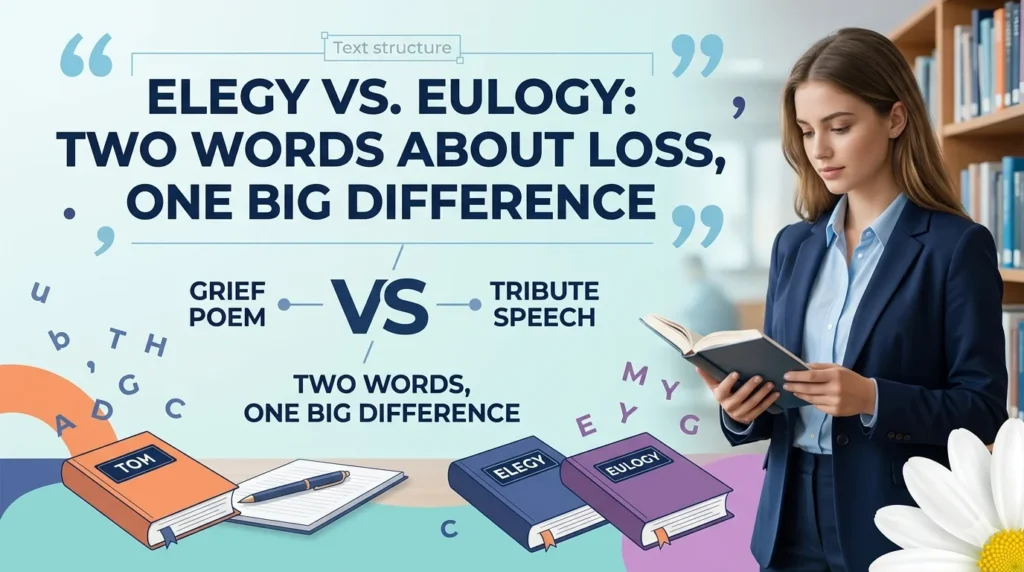

Elegy vs. Eulogy: What’s the Difference? These words are often mixed up in English, but they shape how we express loss and pay tribute in very different ways. My own experience with writing both helped me appreciate their distinct roles. Understanding these differences is important for getting the message right and capturing the essence in sensitive moments that really matter.
Choosing between an elegy and a eulogy can be a delicate task, but knowing the right tool for your purpose makes all the difference. An elegy is a poem or song that deeply expresses sadness about someone who has died. It focuses on emotions, mourning, and the sorrow that follows farewell. Meanwhile, a eulogy is a speech or piece of writing that praises a person highly, usually at a funeral. It celebrates their life and achievements, honoring their memory with admiration and respect, rather than the pain of death.
It’s easy to get confused because of their similar sound and sometimes overlapping context or use, but they serve different purposes. While elegies emphasize heartfelt mourning and sorrow, eulogies highlight the beauty of a life well-lived and leave listeners with hope and gratitude. I’ve found that when you choose the right form, your tribute hits the mark with precision, heartfelt sincerity, and a clear message that resonates with everyone present.
When someone passes away, expressing grief and honoring their memory takes many forms. Among these, elegy and eulogy stand out as two powerful ways we capture feelings of loss and tribute. Yet, many confuse these terms or use them interchangeably- missing the rich nuances each one carries. This article dives deep into the difference between elegy and eulogy, uncovering their unique roles in mourning and praise.
By understanding these two expressions, you’ll appreciate how language shapes grief, remembrance, and celebration. Let’s explore the origins, meanings, literary significance, and practical uses of elegies and eulogies- so you can honor loved ones with clarity and respect.
Why Knowing the Difference Between Elegy and Eulogy Matters
Confusing elegy with eulogy might seem like a small slip, but it touches on how we process death and memory. An elegy’s poetic mourning stirs collective sorrow and reflection, while a eulogy’s heartfelt speech uplifts and honors a specific person. Mixing these up could change the tone of a funeral or a memorial, or blur the intent behind a tribute.
Understanding elegy vs. eulogy also enriches your grasp of literary and cultural traditions. These terms reveal how societies have processed grief for centuries, blending art and oratory to make sense of loss.
If you want to write or deliver a tribute that truly resonates, knowing the difference between elegy and eulogy is essential.
Origins and Etymology: Tracing the Roots of Elegy and Eulogy
Language holds clues to meaning. Let’s trace where these words come from and why their roots reveal their distinct purposes.
The Greek and Latin Roots of Elegy
The word elegy traces back to the ancient Greek term elegeia, which means a lament or poem of mourning. It was originally a form of poetic expression that combined grief with artistic reflection. The Romans adopted the term, and over centuries, it evolved into the literary form we recognize today.
The essence of elegy is lamentation- a voice mourning something lost. Its roots highlight sadness and reflection rather than celebration.
The Classic Greek Heritage of Eulogy
On the other hand, eulogy stems from the Greek eulogia, meaning praise or blessing. Literally, it breaks down to eu- (good) and -logia (words or speech). Eulogies are speeches or written tributes that celebrate someone’s life and virtues.
Unlike elegies, eulogies carry an uplifting tone. Their origin shows their purpose clearly: to honor, bless, and praise the deceased, offering comfort and respect.
Elegy: A Closer Look at Poetic Mourning
When you hear “elegy,” think poetry steeped in sorrow and remembrance. It’s not just any poem- it’s a structured reflection on loss.
Definition and Purpose of Elegy
An elegy is a poem or song expressing sorrow for someone who has died or for something that is lost. It’s a literary form that mourns deeply but often includes a sense of acceptance or hope.
This form allows the writer (or reader) to confront grief, celebrate memory, and sometimes meditate on mortality itself.
Literary Characteristics of Elegies
Elegies share certain features:
- Melancholy tone: Elegies are deeply emotional, usually somber and contemplative.
- Reflective mood: They invite readers to think about life, death, and what remains.
- Themes of loss and memory: They focus on what is gone and how it affects those left behind.
- Structured form: Classical elegies often follow strict poetic meters and rhyme schemes, but modern elegies can be free verse.
Famous Elegies in Literature
Elegies have inspired poets for centuries, from ancient to modern times. Here are a few notable examples:
- “Elegy Written in a Country Churchyard” by Thomas Gray (1751) – A meditation on death and the lives of common people.
- “Adonaïs” by Percy Bysshe Shelley – An elegy mourning the death of fellow poet John Keats.
- “Funeral Blues” by W.H. Auden – A modern, powerful expression of personal loss, often used in memorials.
Each example captures the elegance and depth that make elegies timeless.
Elegiac Tone: Melancholy Reflections on Life
Elegies often conclude with a sense of peace or acceptance, balancing grief with the realization that life goes on. This balance allows elegies to comfort by acknowledging pain without being overwhelmed by it.
Eulogy: The Art of Honoring Through Speech
If elegies mourn through poetry, eulogies praise through spoken or written word, often at funerals or memorial services.
Defining the Eulogy
A eulogy is a speech or written tribute praising someone who has died. It highlights the deceased’s character, accomplishments, and the impact they made on others.
Key Features of Effective Eulogies
- Personal anecdotes: Stories that bring the person to life.
- Balanced tone: While respectful and serious, eulogies often include light moments to reflect the person’s personality.
- Celebration of life: Focus on achievements, qualities, and memories.
- Comfort for the audience: Offering hope and consolation to mourners.
Tips for Writing and Delivering a Memorable Eulogy
- Know your audience: Tailor tone and content accordingly.
- Keep it concise: Aim for 5-10 minutes in spoken delivery.
- Use vivid details: Avoid clichés; bring the person’s story to life.
- Practice aloud: Helps smooth delivery and timing.
- Balance emotion: Be heartfelt but avoid overwhelming grief.
Famous Eulogies That Inspire
- Martin Luther King Jr.’s Eulogy for Medgar Evers – Powerful and uplifting tribute to a civil rights leader.
- Steve Jobs’ Eulogy by his Sister Mona Simpson – Personal, warm, and honest.
- Barack Obama’s Eulogy for John Lewis – Combining respect, history, and hope.
These speeches show how eulogies can inspire and comfort.
Elegy vs. Eulogy: A Clear Side-by-Side Comparison
To crystallize the differences, here’s a quick table that compares the main features of elegy and eulogy:
| Aspect | Elegy | Eulogy |
| Form | Poem or song | Speech or written tribute |
| Purpose | Express sorrow, lament loss | Praise and honor the deceased |
| Tone | Melancholic, reflective | Celebratory, comforting |
| Usage | Literary or artistic expression | Funeral or memorial speeches |
| Emotional Impact | Evokes shared grief and reflection | Inspires remembrance and respect |
| Audience | Readers and listeners of poetry | Mourners at a funeral or memorial service |
Common Mistakes to Avoid
- Using eulogy when referring to poems of mourning.
- Calling any speech an elegy.
- Mixing up pronunciation and spelling.
Pronunciation and Usage Tips: Say It Right Every Time
Knowing how to say and use these words correctly helps you communicate clearly in sensitive moments.
How to Pronounce Elegy and Eulogy
- Elegy: Pronounced EL-eh-jee (/ˈɛlɪdʒi/)
- Eulogy: Pronounced YOO-luh-jee (/ˈjuːlədʒi/)
Quick Usage Reminders
- Use elegy when referring to a poem or song expressing grief.
- Use eulogy for speeches or written tributes praising a deceased person.
Memory Trick
Think:
- Elegy = Elegy-poetry (mourning)
- Eulogy = You + Logy (good words spoken to you)
Why the Difference Between Elegy and Eulogy Matters in Real Life
Understanding these terms isn’t just academic. It shapes how we honor loved ones respectfully.
Real-World Impact
- Funeral settings: Delivering a eulogy instead of reading a poem elegy shapes the tone and audience connection.
- Writing tributes: Correct use reflects emotional intelligence and cultural sensitivity.
- Literary appreciation: Recognizing elegies enriches your experience with poetry and grief expression.
Avoiding Awkward Moments
Misusing these terms can confuse listeners or appear insensitive- especially in delicate moments when emotions run high.
Conclusion
Understanding the difference between life. Elegies, with their poetic reflections and somber tones, give voice to universal sorrow and help us process loss through artful meditation. They remind us of mortality’s inevitability while offering moments of peace and remembrance.
Eulogies, in contrast, are personal tributes- spoken or written- that highlight the unique qualities and achievements of a loved one. Delivered with warmth and respect, eulogies comfort mourners and create a shared space to honor a person’s life. They celebrate legacies and inspire hope, turning grief into gratitude.
Both forms serve essential, complementary roles in mourning rituals. Elegies connect us to the timeless human experience of loss, while eulogies emphasize individual stories that shape our lives.
By mastering the difference between elegy and eulogy, you ensure that your words resonate with the right tone and purpose. Whether you’re writing a poem or delivering a speech, using these terms correctly shows empathy, respect, and cultural awareness. This knowledge also enriches your appreciation of literature, oratory, and the many ways humans have honored death throughout history.
In moments when words matter most, choosing between elegy and eulogy becomes an act of love- a meaningful tribute that helps both speaker and listener navigate the complex emotions of loss. So embrace the power of both: one mourns with beauty and reflection, the other honors with praise and heart.
FAQs
What is the main difference between an elegy and a eulogy?
An elegy is usually a poem or written reflection expressing sadness over loss, while a eulogy is a speech given to honor someone after death. Elegies are often literary and emotional, whereas eulogies are personal tributes delivered at funerals or memorial services.
Is a eulogy always spoken at a funeral?
Most eulogies are delivered during funerals or memorial gatherings, but they can also be shared at celebrations of life or remembrance events. The purpose is to honor and remember the person who has passed away in a respectful and heartfelt way.
Can an elegy be written for someone who is still alive?
Yes, an elegy can sometimes focus on loss, change, or nostalgia rather than death alone. Some writers use elegiac writing to express sadness about fading memories, lost relationships, or the passing of time, even when the subject is still living.
Is a eulogy considered a type of poem?
No, a eulogy is generally a speech rather than poetry. However, some eulogies may include poetic language, quotations, or emotional storytelling. Their main purpose is to celebrate a person’s life and share memories with others.
Why do people confuse elegy and eulogy?
People often confuse these terms because both relate to death, mourning, and remembrance. In addition, the words sound somewhat similar. However, an elegy is literary writing, while a eulogy is a spoken tribute given publicly.
What are famous examples of elegies?
Famous elegies include works like “Elegy Written in a Country Churchyard” by Thomas Gray and “O Captain! My Captain!” by Walt Whitman. These poems express grief, reflection, and emotional remembrance in a literary form.
Who usually gives a eulogy?
A eulogy is often delivered by a close friend, family member, religious leader, or colleague of the deceased. The speaker usually shares personal memories, achievements, and meaningful stories that celebrate the person’s life and character.
Can a eulogy include humor?
Yes, many eulogies include gentle humor and happy memories. Adding lighthearted moments can make the tribute feel more personal and comforting. The key is to balance humor with respect and sensitivity for the audience and occasion.
Is elegy a literary term?
Yes, elegy is an important literary term commonly studied in poetry and literature classes. It refers to a style of writing that reflects on sorrow, mourning, or loss thoughtfully and emotionally.
How can I remember the difference between elegy and eulogy?
A simple way to remember is this: an elegy is usually written and poetic, while a eulogy is spoken aloud. Think of a eulogy as a public tribute and an elegy as a reflective literary expression of grief or remembrance.
