
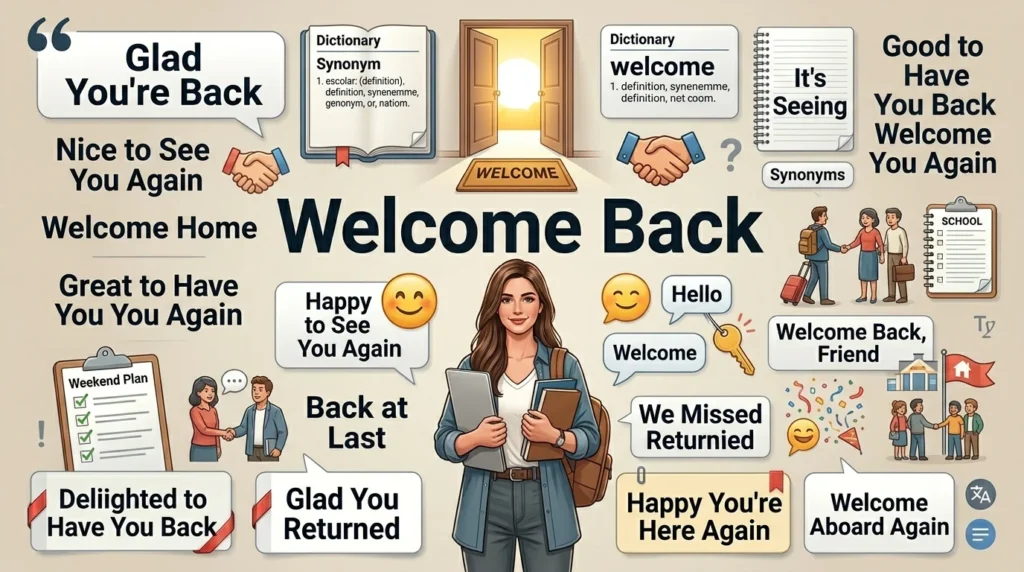

In my experience writing everyday communication messages, I’ve noticed that welcoming someone back is more than a simple formality. It shows real care, appreciation, and warmth, especially when someone is returning to work, school, or a social setting. Whether it is a message, I always try to make it feel more personal and thoughtful. I’ve found that choosing the right words can make a big difference, and exploring alternatives allows you to communicate real excitement, friendliness, and positivity naturally.
From a practical point of view, I’ve learned that these ways of greeting resonate more meaningfully while still keeping things simple. The phrase Welcome Back works perfectly, but it often feels like just a standard line rather than something heartfelt. Adding a more human touch helps the message feel warmer and more connected in any situation.
What Does “Welcome Back” Mean?
“Welcome back” is a phrase used to greet someone who has returned after a period of absence. Expresses pleasure and acknowledgment of someone’s return
Warm, friendly, and positive
“Welcome back! We missed having you in the office.”
When to Use “Welcome Back”
- When colleagues return from vacation or leave
- Greeting friends or family after time apart
- Welcoming someone to a class, event, or online group
- In emails, social media messages, or in-person interactions
It works in both professional and casual contexts, as long as the tone matches the relationship.
Is It Professional/Polite to Say “Welcome Back”?
Yes. It is polite, professional, and appropriate for most settings. Adding a small personal note makes it even warmer:
“Welcome back, Sarah! We’re excited to hear about your trip.”
Pros and Cons of Using “Welcome Back”
Pros:
- Polite, friendly, and universally understood
- Shows acknowledgment and appreciation
- Works in professional and casual settings
Cons:
- Can feel generic if overused
- Less expressive than some creative or enthusiastic alternatives
Welcome Back Synonyms:
- Great to Have You Back
- It’s Wonderful to See You Again
- We’ve Missed You
- Glad You’re Back
- Happy to Have You Back
- Welcome Home
- Good to See You Back
- Nice to Have You Back
- It’s a Pleasure to Have You Back
- We’re Excited You’re Back
- Welcome Aboard Again
- Back in Action
- Great to Have You Here Again
- Happy You’re Back
- Welcome to the Team Again
Great to Have You Back
Meaning:
Highlights pleasure and appreciation for the person’s return.
Explanation:
Focuses on positive sentiment and acknowledgment of their presence.
Example:
“Great to have you back! The team really missed you.”
Best Use:
Colleagues, clients, friends
Worst Use:
Situations where formality is strictly required without a personal tone
Tone:
Warm, friendly, appreciative
It’s Wonderful to See You Again
Meaning:
Emphasizes delight and warmth on seeing someone return.
Explanation:
Ideal for both professional and personal settings, showing genuine happiness.
Example:
“It’s wonderful to see you again! I hope you had a good break.”
Best Use:
Meetings, social gatherings, office welcomes
Worst Use:
Texts or brief messages where brevity is key
Tone:
Polite, warm, enthusiastic
We’ve Missed You
Meaning:
Expresses that the person’s absence was noticed and valued.
Explanation:
Adds emotional depth, signaling care and appreciation.
Example:
“Welcome back! We’ve missed you around the office.”
Best Use:
Close colleagues, friends, family
Worst Use:
Very formal professional settings without prior personal connection
Tone:
Warm, friendly, caring
Glad You’re Back
Meaning:
Simple and versatile, expressing happiness at someone’s return.
Explanation:
Friendly phrase that works in most professional or casual contexts.
Example:
“Glad you’re back! How was your vacation?”
Best Use:
Professional emails, casual office chats, friends
Worst Use:
Situations requiring a formal or highly ceremonial tone
Tone:
Friendly, approachable, positive
Happy to Have You Back
Meaning:
Expresses joy and positivity at the person’s return.
Explanation:
Works for professional emails, meetings, and casual greetings.
Example:
“Happy to have you back, John! We’ve been looking forward to your input.”
Best Use:
Professional colleagues, clients, social groups
Worst Use:
Overly formal or reserved settings
Tone:
Warm, friendly, professional
Welcome Home
Meaning:
A heartfelt phrase, particularly for personal or family contexts.
Explanation:
Suggests comfort, familiarity, and warmth, ideal for friends or family returning.
Example:
“Welcome home! We’ve prepared your favorite meal.”
Best Use:
Family, friends, personal gatherings
Worst Use:
Formal corporate emails
Tone:
Warm, personal, affectionate
Good to See You Back
Meaning:
Expresses acknowledgment and casual happiness.
Explanation:
Slightly informal but versatile for professional and personal interactions.
Example:
“Good to see you back! Hope the trip went well.”
Best Use:
Colleagues, casual office environments, friends
Worst Use:
Highly formal or ceremonial communication
Tone:
Friendly, approachable, neutral-positive
Nice to Have You Back
Meaning:
Polite and friendly, emphasizing comfort and appreciation.
Explanation:
Works in emails, chats, and in-person greetings.
Example:
“Nice to have you back! The project team missed your guidance.”
Best Use:
Colleagues, professional acquaintances, friends
Worst Use:
Overly formal contexts
Tone:
Friendly, warm, and polite
It’s a Pleasure to Have You Back
Meaning:
Polished, professional alternative emphasizing pleasure and respect.
Explanation:
Suitable for formal professional settings while still conveying warmth.
Example:
“It’s a pleasure to have you back, Dr. Smith. We’ve been eagerly awaiting your insights.”
Best Use:
Clients, executives, formal professional emails
Worst Use:
Casual texts to friends
Tone:
Polite, professional, warm
We’re Excited You’re Back
Meaning:
Conveys enthusiasm and positivity at the person’s return.
Explanation:
Works for teams, social groups, or professional environments with a friendly culture.
Example:
“We’re excited you’re back! Can’t wait to hear your ideas.”
Best Use:
Team environments, group settings
Worst Use:
Very formal corporate emails
Tone:
Cheerful, positive, friendly
Welcome Aboard Again
Meaning:
Slightly formal, suitable for work or official group settings.
Explanation:
Acknowledges return to a team, project, or organization with respect and warmth.
Example:
“Welcome aboard again, Mark! We’re glad to have you on the team.”
Best Use:
Professional settings, project teams
Worst Use:
Casual family or friends interactions
Tone:
Professional, polite, positive
Back in Action
Meaning:
Informal, energetic, suggesting productivity and readiness.
Explanation:
Ideal for returning colleagues, teammates, or friends after a break.
Example:
“Back in action! Glad to have you with us again.”
Best Use:
Casual office teams, friends, sports teams
Worst Use:
Formal emails or client communications
Tone:
Energetic, informal, friendly
Great to Have You Here Again
Meaning:
Slightly longer, polite, emphasizing appreciation and acknowledgment.
Explanation:
Works well in professional and semi-formal social settings.
Example:
“Great to have you here again, Sarah! The team looks forward to collaborating with you.”
Best Use:
Professional gatherings, team meetings
Worst Use:
Short casual messages where brevity is preferred
Tone:
Warm, polite, friendly
Happy You’re Back
Meaning:
Simple, versatile, and friendly.
Explanation:
Conveys happiness and warmth without being too formal or informal.
Example:
“Happy you’re back! Let’s catch up soon.”
Best Use:
Friends, colleagues, semi-formal emails
Worst Use:
Very formal ceremonial contexts
Tone:
Friendly, approachable, warm
Welcome to the Team Again
Meaning:
Professional alternative for returning team members or colleagues.
Explanation:
Suitable for workplaces, projects, or group environments, emphasizing belonging and teamwork.
Example:
“Welcome to the team again, Alex! We’re thrilled to have you on board.”
Best Use:
Teams, colleagues, professional projects
Worst Use:
Casual family or social settings
Tone:
Professional, warm, appreciative
Comparison Table of Top Alternatives
| Alternative | Tone | Best Use | Formality |
| Great to Have You Back | Warm, Friendly | Colleagues, friends | Semi-formal |
| It’s Wonderful to See You Again | Polite, Enthusiastic | Meetings, gatherings | Semi-formal |
| We’ve Missed You | Caring, Warm | Colleagues, family | Semi-formal/Informal |
| Glad You’re Back | Friendly, Approachable | Professional & casual | Semi-formal |
| Happy to Have You Back | Warm, Positive | Colleagues, clients | Semi-formal |
| Welcome Home | Personal, Affectionate | Family, friends | Informal |
| Good to See You Back | Friendly, Neutral | Colleagues, friends | Semi-formal |
| Nice to Have You Back | Polite, Friendly | Colleagues, friends | Semi-formal |
| It’s a Pleasure to Have You Back | Professional, Warm | Clients, executives | Formal |
| We’re Excited You’re Back | Cheerful, Friendly | Teams, group settings | Semi-formal |
| Welcome Aboard Again | Polite, Formal | Professional teams | Formal |
| Back in Action | Energetic, Informal | Teams, friends | Informal |
| Great to Have You Here Again | Warm, Polite | Professional gatherings | Semi-formal |
| Happy You’re Back | Friendly, Versatile | Friends, colleagues | Semi-formal |
| Welcome to the Team Again | Professional, Appreciative | Teams, colleagues | Formal |
Final Thoughts
Welcoming someone back is more than just a routine greeting—it’s an opportunity to show warmth, appreciation, and genuine care. Using alternatives to “Welcome Back” allows your message to feel more personal and thoughtful, whether in professional emails, social interactions, or casual texts. From heartfelt phrases like “We’ve Missed You” to professional-friendly options such as “It’s a Pleasure to Have You Back”, these alternatives convey positivity while strengthening connections.
Choosing the right phrase depends on the relationship, context, and tone you want to express. Personalizing your greeting by acknowledging the person’s absence or achievements can make them feel valued and respected. With these 15 alternatives, you now have a versatile toolkit to make every return greeting meaningful, warm, and memorable, fostering positive relationships in every setting.
FAQs
Can I use “Welcome Back” in professional emails?
Yes! “Welcome Back” is widely accepted in professional settings. Pair it with a personal note like “Welcome back, Sarah! We missed your insights on the project,” to add warmth while maintaining professionalism. Alternatives like “Happy to Have You Back” or “It’s a Pleasure to Have You Back” are also suitable for formal communication.
Which alternatives work best for friends?
For friends, casual and warm options such as “We’ve Missed You”, “Welcome Home”, or “Happy You’re Back” are perfect. These phrases express care and excitement while keeping the tone relaxed, friendly, and personal, making the return feel more heartfelt.
Are these phrases appropriate for family greetings?
Absolutely. Phrases like “Welcome Home”, “We’ve Missed You”, and “Back in Action” are ideal for family members. They convey warmth, care, and affection, making the return feel personal, cherished, and memorable.
Which alternatives suit colleagues?
Professional-friendly phrases include “Great to Have You Back”, “Happy to Have You Back”, “It’s a Pleasure to Have You Back”, and “Welcome Aboard Again”. These show appreciation while maintaining professionalism, making them ideal for office emails or team meetings.
Can playful alternatives be used professionally?
It depends on the relationship and company culture. Casual phrases like “Back in Action” or “We’re Excited You’re Back” are suitable for team settings or informal office culture. For formal clients or executives, stick with “It’s a Pleasure to Have You Back” or “Great to Have You Here Again.”
How can I make a greeting more personal?
Add context or acknowledgment, e.g., “Welcome back! We missed your leadership in last week’s project.” Personal touches show attentiveness, making your greeting sincere and memorable. Mentioning their absence or achievements enhances warmth.
Are these greetings suitable for social media?
Yes! Casual and friendly alternatives like “Back in Action”, “We’ve Missed You”, or “Happy You’re Back” work well for posts, conveying excitement and positivity to friends, followers, or group members.
Can these phrases be used for long absences?
Definitely. Options like “We’ve Missed You”, “Welcome Home”, or “It’s Wonderful to See You Again” acknowledge extended absences and make the person feel valued, appreciated, and warmly received upon their return.
How do I choose the right tone?
Consider the relationship and context. Use warm, personal phrases for friends and family, friendly but professional alternatives for colleagues, and polite, formal options for clients or executives. Matching tone ensures the greeting feels sincere and appropriate.
Can I combine two phrases in one greeting?
Yes! Combining phrases adds warmth, e.g., “Welcome back! We’ve missed you and are excited to have you here again.” Ensure the combination is natural, not too long, and matches the tone of your relationship.
