
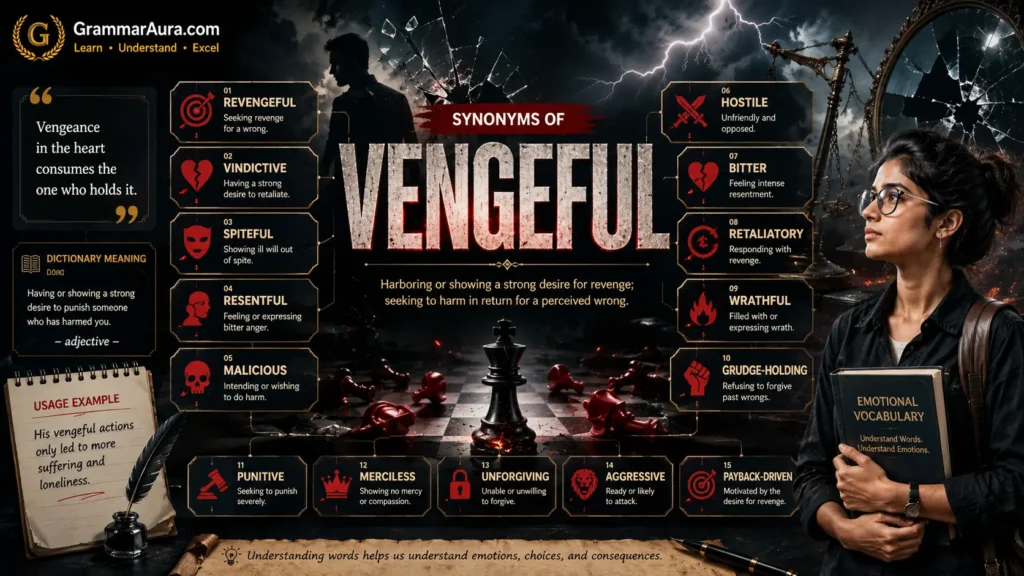

When choosing the right word, I’ve noticed it can completely change how a message is received. The word ” vengeful ” is often used to describe someone who is seeking revenge or holding resentment, but there are many alternative words that can express similar ideas with different shades of meaning. Building a better understanding of these alternatives helps you communicate more accurately, whether you are writing a story, describing behavior, or having a thoughtful conversation.
From my experience, exploring the 15 best synonyms along with their meanings, examples, and ideal usage situations makes word choice much easier. Instead of relying on a single term like vengeful, I prefer selecting words that fit the exact context. This approach improves clarity, strengthens communication, and helps ensure the message is received in the way you intend.
What Does “Vengeful” Mean?
The word vengeful describes a person who strongly desires revenge, retaliation, or punishment against someone who has wronged them. It often suggests lingering anger, bitterness, and a determination to “get even.”A strong desire to seek revenge or inflict punishment for a perceived wrong. After being betrayed by his business partner, he became increasingly vengeful and looked for ways to retaliate. Someone who is vengeful typically focuses on settling scores rather than moving forward.
When to Use “Vengeful”
You can use vengeful when describing:
- Someone seeking revenge.
- A character driven by retaliation.
- Feelings of resentment after being wronged.
- Actions motivated by payback rather than forgiveness.
Example:
The villain’s vengeful actions created conflict throughout the story.
Is It Professional/Polite to Say “Vengeful”?
Vengeful is a legitimate word, but it can sound quite negative and judgmental.
Professional Situations
It may be acceptable when discussing:
- Literature
- Psychology
- Historical events
- Character analysis
Less Appropriate Situations
Avoid directly calling coworkers, clients, or acquaintances vengeful, as it may sound accusatory.
Better alternative in professional settings:
- Resentful
- Bitter
- Retaliatory
Pros and Cons of Using “Vengeful”
Pros
- Clearly communicates revenge-driven behavior
- Strong emotional impact
- Widely understood
- Useful in storytelling and analysis
Cons
- Can sound harsh
- May appear judgmental
- Often carries strong negative connotations
- Not always suitable for professional communication
Vengeful Synonyms:
- Vindictive
- Resentful
- Retaliatory
- Spiteful
- Bitter
- Malicious
- Grudge-Holding
- Revenge-Seeking
- Hostile
- Merciless
- Unforgiving
- Antagonistic
- Malevolent
- Ruthless
- Payback-Oriented
Vindictive
Meaning:
Having a strong desire for revenge.
Definition:
Intentionally seeking to hurt someone in return for a perceived wrong.
Explanation:
Vindictive is one of the closest synonyms to vengeful. It often suggests deliberate efforts to punish or harm another person.
Example:
After being fired, he made several vindictive attempts to damage the company’s reputation.
Best Use:
Character descriptions and serious discussions.
Worst Use:
Casual workplace conversations.
Tone:
Strongly negative
Resentful
Meaning:
Feeling bitterness because of unfair treatment.
Definition:
Experiencing persistent anger or disappointment.
Explanation:
Unlike vengeful, resentful focuses more on lingering negative feelings than on taking revenge.
Example:
She remained resentful for years after being excluded from the project.
Best Use:
Personal relationships and emotional discussions.
Worst Use:
Situations requiring stronger language about revenge.
Tone:
Moderately negative
Retaliatory
Meaning:
Intended as revenge.
Definition:
Done in response to an injury or offense.
Explanation:
This word emphasizes actions rather than feelings.
Example:
The company denied making retaliatory decisions against former employees.
Best Use:
Professional and legal contexts.
Worst Use:
Informal conversations.
Tone:
Formal and negative
Spiteful
Meaning:
Motivated by a desire to hurt someone.
Definition:
Showing malice or ill will.
Explanation:
A spiteful person often acts out of bitterness rather than justice.
Example:
His spiteful comments upset everyone at the gathering.
Best Use:
Describing harmful behavior.
Worst Use:
Neutral situations.
Tone:
Highly negative
Bitter
Meaning:
Filled with anger and disappointment.
Definition:
Holding onto negative emotions over time.
Explanation:
Bitter suggests emotional pain that has not healed.
Example:
He became bitter after losing the promotion.
Best Use:
Emotional and personal discussions.
Worst Use:
Situations requiring active revenge.
Tone:
Negative and emotional
Malicious
Meaning:
Intending to cause harm.
Definition:
Motivated by ill will.
Explanation:
Malicious highlights harmful intent rather than revenge specifically.
Example:
The rumors were spread with malicious intent.
Best Use:
Professional and legal writing.
Worst Use:
Minor disagreements.
Tone:
Severely negative
Grudge-Holding
Meaning:
Unwilling to forgive past offenses.
Definition:
Continuing to remember and resent a wrong.
Explanation:
This phrase focuses on maintaining resentment over time.
Example:
His grudge-holding attitude damaged several friendships.
Best Use:
Relationship discussions.
Worst Use:
Formal documents.
Tone:
Mildly negative
Revenge-Seeking
Meaning:
Looking for opportunities to get even.
Definition:
Pursuing retaliation against someone.
Explanation:
This directly describes behavior aimed at revenge.
Example:
The character became increasingly revenge-seeking after the betrayal.
Best Use:
Stories and dramatic writing.
Worst Use:
Professional communication.
Tone:
Strongly negative
Hostile
Meaning:
Unfriendly and antagonistic.
Definition:
Showing opposition or aggression.
Explanation:
A hostile person may not seek revenge but displays ongoing negativity.
Example:
The discussion became hostile after the accusation.
Best Use:
Conflict descriptions.
Worst Use:
Friendly interactions.
Tone:
Negative
Merciless
Meaning:
Showing no compassion.
Definition:
Acting without pity or forgiveness.
Explanation:
This word emphasizes harshness and a lack of empathy.
Example:
The ruler was merciless toward his enemies.
Best Use:
Historical and literary contexts.
Worst Use:
Minor disputes.
Tone:
Very severe
Unforgiving
Meaning:
Reluctant to forgive mistakes.
Definition:
Holding others accountable without leniency.
Explanation:
An unforgiving person may not seek revenge but refuse reconciliation.
Example:
She remained unforgiving despite multiple apologies.
Best Use:
Personal and emotional discussions.
Worst Use:
Situations requiring stronger revenge language.
Tone:
Moderately negative
Antagonistic
Meaning:
Actively opposed or hostile.
Definition:
Showing opposition toward others.
Explanation:
This word highlights conflict and resistance.
Example:
His antagonistic behavior created tension in the group.
Best Use:
Workplace and relationship discussions.
Worst Use:
Friendly exchanges.
Tone:
Negative
Malevolent
Meaning:
Wishing harm upon others.
Definition:
Having evil or harmful intentions.
Explanation:
Malevolent suggests deep-seated ill will.
Example:
The story’s villain had a malevolent plan.
Best Use:
Literature and formal writing.
Worst Use:
Everyday conversation.
Tone:
Extremely negative
Ruthless
Meaning:
Lacking compassion.
Definition:
Willing to harm others to achieve goals.
Explanation:
A ruthless person prioritizes objectives over kindness.
Example:
The competitor was ruthless in business negotiations.
Best Use:
Business and character analysis.
Worst Use:
Describing minor disagreements.
Tone:
Strongly negative
Payback-Oriented
Meaning:
Focused on getting even.
Definition:
Motivated by compensation for perceived wrongs.
Explanation:
This modern phrase highlights a mindset centered on revenge.
Example:
His payback-oriented attitude prolonged the conflict.
Best Use:
Informal discussions.
Worst Use:
Formal legal writing.
Tone:
Conversational and negative
Comparison Table of Top Alternatives
| Synonym | Meaning | Best Use | Tone |
| Vindictive | Seeking revenge | Character analysis | Strongly negative |
| Resentful | Holding bitterness | Emotional discussions | Moderately negative |
| Retaliatory | Acting in revenge | Legal/professional writing | Formal |
| Spiteful | Intending harm | Behavior descriptions | Highly negative |
| Bitter | Lingering anger | Personal situations | Emotional |
| Malicious | Harmful intent | Legal and formal writing | Severe |
| Grudge-Holding | Refusing to forgive | Relationship discussions | Mildly negative |
| Revenge-Seeking | Pursuing payback | Stories and narratives | Strongly negative |
| Hostile | Openly unfriendly | Conflict discussions | Negative |
| Merciless | Showing no compassion | Historical/literary writing | Severe |
| Unforgiving | Refusing forgiveness | Relationship analysis | Moderate |
| Antagonistic | Oppositional behavior | Workplace discussions | Negative |
| Malevolent | Wishing harm | Literary contexts | Extremely negative |
| Ruthless | Harsh and uncompromising | Business or character studies | Strongly negative |
| Payback-Oriented | Focused on getting even | Informal conversations | Conversational |
Final Thoughts
Choosing the right synonym for vengeful can make your writing more accurate, engaging, and emotionally nuanced. While all the alternatives in this guide relate to feelings of resentment, hostility, or revenge, each carries its own unique shade of meaning. For example, vindictive emphasizes deliberate retaliation, while resentful focuses more on lingering hurt and disappointment. Understanding these distinctions allows you to communicate your ideas with greater precision and empathy.
Whether you’re writing a story, describing a character, discussing personal relationships, or improving your vocabulary, these alternatives provide valuable options. The best word depends on the context, tone, and intensity you want to convey. By expanding your vocabulary beyond vengeful, you can create clearer messages, richer descriptions, and more meaningful conversations that resonate with your audience.
FAQs
What is the closest synonym to “vengeful”?
The closest synonym to vengeful is vindictive. Both words describe a person who seeks revenge or wishes to retaliate against someone who has caused harm. However, vindictive often implies a stronger and more deliberate desire to punish another person. It is commonly used in literature, psychology, and everyday conversations when discussing revenge-driven behavior.
Is “vengeful” always a negative word?
Yes, vengeful generally carries a negative connotation because it suggests a desire for revenge rather than forgiveness or resolution. While it can accurately describe a person’s emotions or actions, it is rarely considered a positive trait. In storytelling, however, a vengeful character may be portrayed sympathetically depending on the circumstances surrounding their motivations and experiences.
Can “resentful” replace “vengeful”?
Sometimes, but not always. Resentment refers to ongoing bitterness or hurt feelings caused by perceived unfairness, whereas vengeance refers to a desire for retaliation. A person can feel resentful without wanting revenge. If your focus is on emotional pain rather than revenge-seeking behavior, resentful is often the better choice in both writing and conversation.
Which synonym is best for professional writing?
For professional writing, retaliatory, hostile, or resentful are often better choices than vengeful, depending on the context. These words sound more objective and less emotionally charged. In workplace reports, legal documents, or academic discussions, choosing a precise and neutral term helps maintain professionalism while accurately describing behavior or actions.
What is the difference between “spiteful” and “vengeful”?
Spiteful describes actions intended to hurt, annoy, or upset someone, often out of bitterness or jealousy. Vengeful, on the other hand, specifically relates to seeking revenge for a perceived wrong. While both words involve negative emotions, spiteful behavior may occur without a desire for justice or retaliation, making it slightly different in meaning and usage.
Is “malevolent” stronger than “vengeful”?
Yes, malevolent is generally stronger than vengeful. A vengeful person seeks revenge because of a specific grievance, while a malevolent person has a broader desire to cause harm or suffering. The word often appears in literature and formal writing to describe villains, evil intentions, or deeply harmful attitudes that go beyond ordinary resentment.
Which synonym works best in storytelling?
Vindictive, revenge-seeking, and malevolent are excellent choices for storytelling. These words help create vivid characters and communicate clear motivations. Writers often use them to describe antagonists or protagonists driven by betrayal, injustice, or loss. Selecting the right synonym depends on whether the character feels bitterness, actively seeks revenge, or intends serious harm.
Can “hostile” mean the same thing as “vengeful”?
Not exactly. Hostile means unfriendly, aggressive, or antagonistic, while vengeful specifically refers to wanting revenge. A hostile person may simply dislike someone or behave aggressively without seeking retaliation. Therefore, although the two words sometimes overlap in emotional tone, they are not interchangeable in every situation or context.
What is a softer alternative to “vengeful”?
A softer alternative to vengeful is resentful or unforgiving. These words focus more on emotional reactions than on active revenge. They can be useful when you want to describe someone’s lingering hurt, disappointment, or reluctance to forgive without implying that they are planning to retaliate or intentionally harm another person.
Why is it important to know synonyms for “vengeful”?
Knowing synonyms for vengeful helps you communicate more accurately and effectively. Different words convey different levels of anger, resentment, hostility, and revenge. By understanding these subtle distinctions, you can improve your writing, enrich your vocabulary, create more believable characters, and choose language that best fits the tone and context of your message.
