Indolence or Insolence? Learn the Difference with Easy Examples

Indolence or Insolence? Learn the Difference with Easy Examples

Many writers confuse “indolence” and “insolence” because the words look and sound alike, but their meanings are completely different. Knowing the difference matters because using the wrong word can quickly change the meaning of a sentence. Indolence means laziness, inactivity, or avoiding effort. It describes someone who lacks energy or motivation to work or take … Read more


Hastle or Hassle: Which Is Correct? A Simple Guide

Hastle or Hassle: Which Is Correct? A Simple Guide

English spelling can be confusing, and “hassle” vs. “hastle” is a common example. Many people pause while writing and wonder which version is correct. The simple answer is clear: “hassle” is the correct spelling, while “hastle” is a misspelling and is not recognized in standard English. The word hassle means trouble, inconvenience, or an annoying … Read more

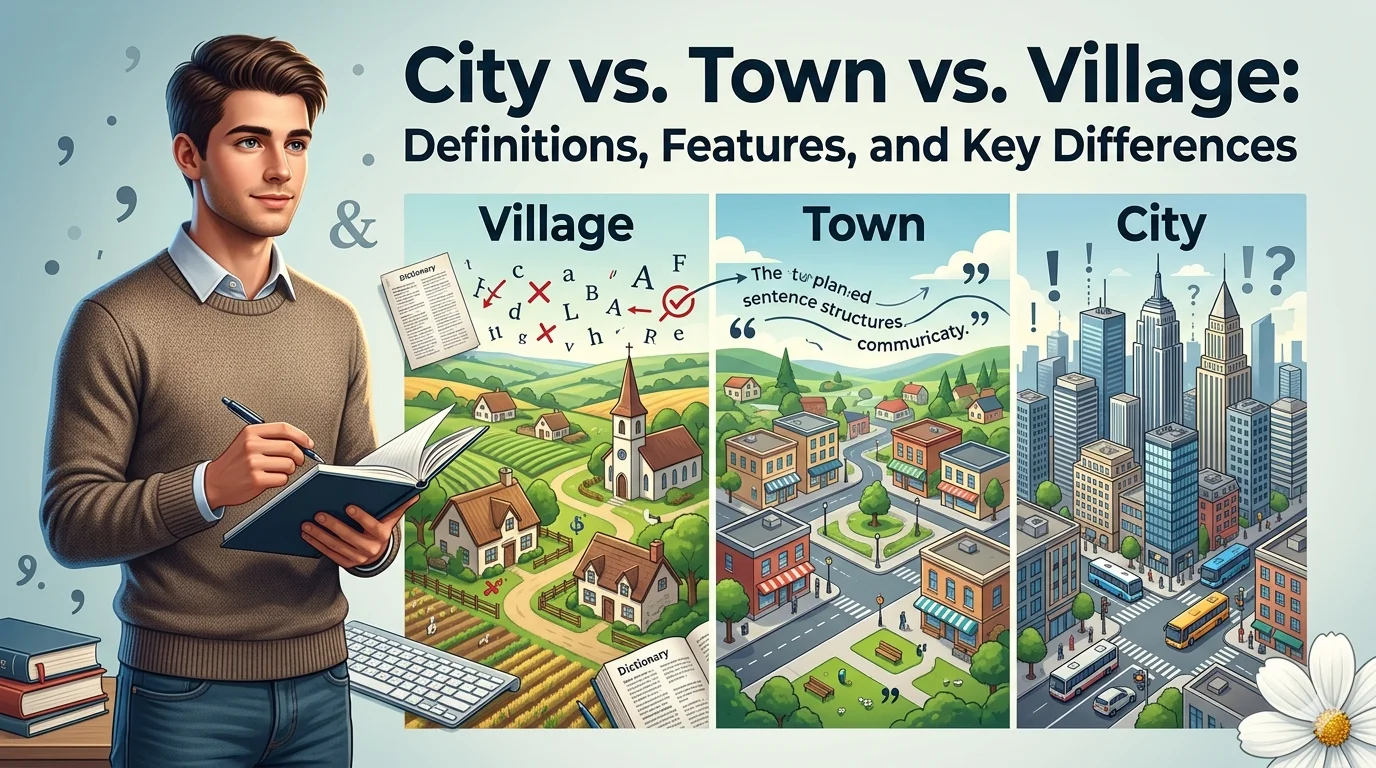
City vs. Town vs. Village: Definitions, Features, and Key Differences

City vs. Town vs. Village: Definitions, Features, and Key Differences

Understanding the difference between cities, towns, and villages goes far beyond population size. While the number of people matters, these places are also shaped by governance, infrastructure, culture, history, and daily lifestyle. Each type of settlement has its own identity and plays a unique role in how communities grow and function. A village is usually … Read more

The Truth About Forgo vs. Forego You Were Never Taught

The Truth About Forgo vs. Forego You Were Never Taught

Forgo vs. Forego often confuses writers because these words look similar but carry different meanings in real English language usage and communication contexts. The understanding of the difference between forgo and forego is often confusing, even for experienced writers, because their similar spellings and pronunciations make their meanings seem close, though they actually diverge significantly … Read more

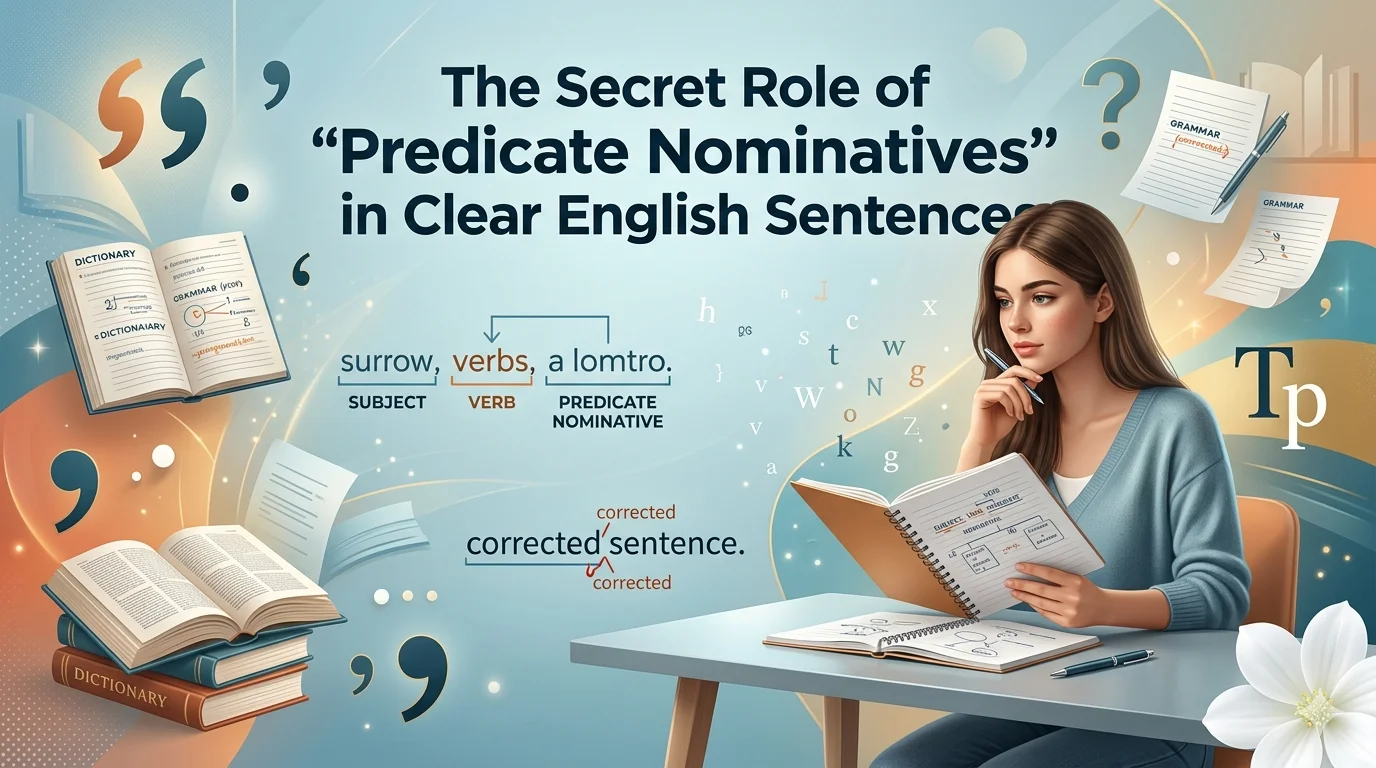
The Secret Role of “Predicate Nominatives” in Clear English Sentences

The Secret Role of “Predicate Nominatives” in Clear English Sentences

Predicate Nominatives help simplify grammar understanding and improve sentence clarity when used correctly in English writing and communication practice. A strong grammar understanding is not intimidating when you start grasping basic concepts like predicate nominative, which helps build clear sentences and improve writing in everyday English. For any student, professional, teacher, or language lover, this guide … Read more

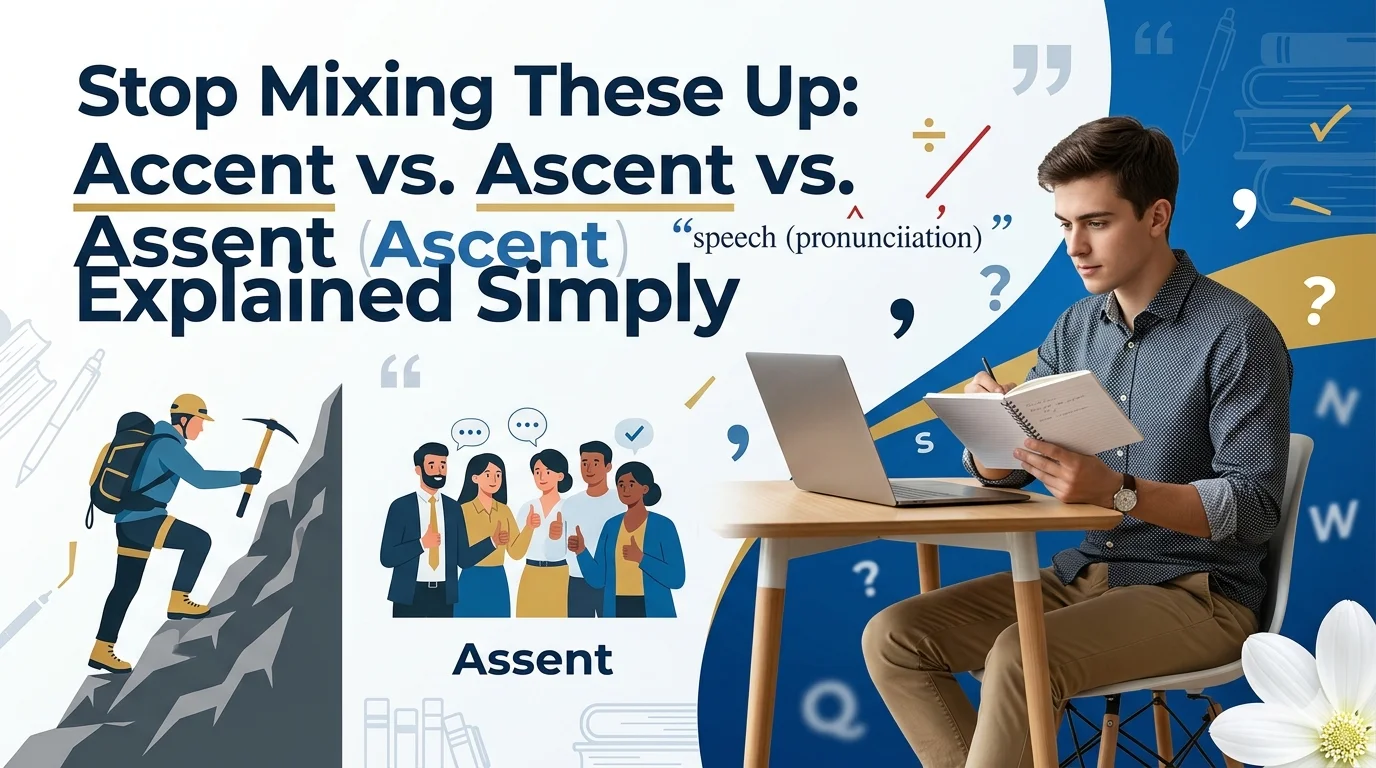
Stop Mixing These Up: Accent vs. Ascent vs. Assent Explained Simply

Stop Mixing These Up: Accent vs. Ascent vs. Assent Explained Simply

Accent vs. Ascent vs. Assent often confuses writers because these words may sound alike but carry completely different meanings in English usage and communication. The words accent, ascent, and assent often sound alike, but they mean wildly different things, and they can easily trip up even seasoned writers in English. These are common homophones with … Read more