
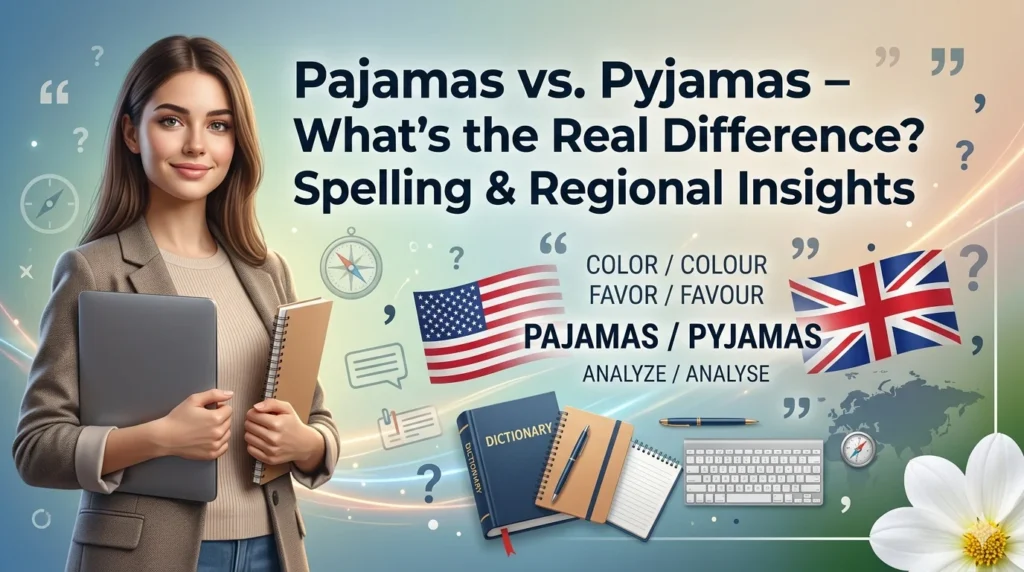

Pajamas vs. Pyjamas may look like a tiny spelling change, but it often shapes writing style, reader trust, and global English in real ways. Language continues to evolve, but some spelling differences truly never fade, and pajamas vs. pyjamas remains a classic example. The real difference is not really about meaning. It is more about spelling, usage, and useful regional insights. If you are writing bedtime stories, crafting a blog post, or shopping online, knowing the right version really matters.
The connection between both spellings links closely with language evolution and regional spelling. In American English spelling, pajamas is more common, while pyjamas appears more often in British-style English usage. That is why the audience matters so much. A children’s article built around bedtime stories may use one version, while online shopping websites and blogging pages may choose another depending on location.
From experience, I have seen readers notice this instantly. Some connect pajamas with American reading habits, while others feel more comfortable with pyjamas. That simple spelling choice can shape tone, trust, and how natural your writing feels for your audience.
Pajamas vs. Pyjamas – Quick Snapshot
Both pajamas and pyjamas refer to the same thing: loose-fitting clothes worn for sleeping or lounging. The difference? It’s spelling and regional preference, not meaning.
| Feature | Pajamas (US) | Pyjamas (UK/Commonwealth) |
| Spelling Style | American English | British English |
| Usage Regions | USA, Philippines | UK, Australia, India |
| Pronunciation | /ˈpɑːdʒɑːməz/ | Same as pajamas |
| Plural Form | Plural noun | Plural noun |
🌍 Fun Fact: Google search trends show that Americans search for “pajamas” 6x more often than “pyjamas”!
What Does “Pajamas” Mean?
In American English, pajamas refer to a two-piece garment set typically made of soft fabric, worn for sleeping. The term has been absorbed into everyday vocabulary, used across formal and informal contexts.
Usage in American English
- Pajamas are usually worn at bedtime.
- They are also common attire during slumber parties, lazy Sundays, or casual remote workdays.
Examples
- “I bought matching Christmas pajamas for the whole family.”
- “She stayed in her pajamas all day, sipping cocoa and reading.”
Grammatical Note
Although “pajamas” looks plural, it’s often treated as a plural noun like scissors or pants:
- Correct: My pajamas are clean.
- Incorrect: My pajamas is clean.
What Does “Pyjamas” Mean?
Pyjamas are the British English equivalent of “pajamas.” It means the same thing but follows UK spelling rules. You’ll see this version in the UK, Ireland, Australia, New Zealand, India, South Africa, and other Commonwealth nations.
Examples
- “She packed a pair of striped pyjamas for the trip.”
- “My son forgot his pyjamas at grandma’s.”
In the UK, “pyjamas” are also referred to casually as:
- Jim-jams (colloquial)
- PJ’s (international slang)
Pajamas vs. Pyjamas – A Regional Spelling Divide
Understanding where each term is used is essential, especially if you’re writing for international audiences.
| Region | Preferred Spelling |
| United States | Pajamas |
| United Kingdom | Pyjamas |
| Canada | Pyjamas (mostly) |
| Australia | Pyjamas |
| India | Pyjamas |
| New Zealand | Pyjamas |
| South Africa | Pyjamas |
| Philippines | Pajamas |
Google Ngram Viewer (1900–2024)
A quick look at Google’s Ngram shows:
- “Pyjamas” was more dominant in early 20th-century British literature.
- “Pajamas” spiked post-WWII in American publications and now vastly outpace “pyjamas” globally.
⚡ Key Takeaway: Always consider your audience. Writing for Brits? Use pyjamas. For Americans? Stick to pajamas.
Etymology and Linguistic Evolution
Both “pajamas” and “pyjamas” originate from the Persian-Hindustani compound word pāy-jāmeh (meaning “leg-garment”).
Timeline of Adoption
| Century | Milestone |
| 14th | Word enters Persian from older Indo-Iranian roots |
| 17th | Adopted by British colonists in India (as “pyjamas”) |
| 19th | Becomes common sleepwear in England |
| Early 20th | The US simplifies the spelling to “pajamas” |
Language Note
The British retained the original Hindustani-influenced spelling, while Americans followed the pattern of spelling simplification (like “color” vs “colour”).
Influence of Colonialism, Global Trade, and Media
Colonial India
The British colonizers encountered the pajama in India and adopted the concept of two-piece cotton legwear for comfort in tropical climates. Hence, the word entered British English first as “pyjamas.”
Global Trade Routes
- Through trade routes, pajamas became a staple in Europe, particularly as fashion sleepwear in the Victorian era.
- American traders and missionaries adopted the word and concept but altered the spelling to match American spelling conventions.
Hollywood vs. BBC
| Media Power | Preferred Term | Example |
| Hollywood | Pajamas | The Cat in the Hat (Dr. Seuss) |
| BBC | Pyjamas | Peppa Pig |
Branding Implications
- Victoria’s Secret markets pajamas.
- Marks & Spencer sells pyjamas.
Both cater to different audiences, despite selling the same product.
Pajamas in Pop Culture, Media & Literature
Books, Films, and shows all reflect the regional spelling depending on their origin.
In Literature
- The Boy in the Striped Pyjamas by John Boyne (UK)
- If You Give a Pig a Pancake mentions “pajamas” (USA)
In Film & TV
- Pajama Game (1957 Broadway musical, USA)
- The Pyjama Girl Case (1977 crime film, Australia)
“He put on his striped pyjamas and tiptoed into the dark.” – John Boyne
Branding in E-commerce
| Platform | Country | Search Term Used |
| Amazon US | USA | Pajamas |
| Amazon UK | UK | Pyjamas |
| Flipkart | India | Pyjamas |
Common Idioms and Phrases Using Pajamas/Pyjamas
Common Expressions
| Phrase | Region | Meaning |
| Pajama party | USA | Slumber party, usually for children |
| Pyjama drama | UK | Exaggerated situation over trivial matters |
| In your pajamas | Global | Not dressed formally |
| Put on your pajamas | Global | Get ready for bed |
| Jammies / PJs | Global | Casual/slang term for pajamas |
Pop Culture Use
- “Pajama Day” episodes feature in The Simpsons and South Park
- “Pyjama Drama” is a UK early childhood theatre program
Which Spelling Should You Use? (Context Matters)
Tips for Choosing the Right Form:
- Audience Location:
- US = pajamas
- UK/Commonwealth = pyjamas
- Publication Type:
- Academic papers: match the region’s English style guide
- Brand website: stay consistent across all copy
- SEO Strategy:
- Use both keywords in metadata, alt tags, and product descriptions if targeting global users
Checklist: Choosing Pajamas or Pyjamas
✅ Rule of thumb: Stick to the spelling your readers expect. Mix them only if your audience is international.
Bonus Section – What About “Jammies”?
“Jammies” is an affectionate slang term for pajamas/pyjamas, mostly used with children or informally.
Usage
- “Go get your jammies on, it’s bedtime!”
- Also written as “PJ’s” in short
Popularity
- Common in the US, UK, Canada, and Australia
- Used across parenting blogs, cartoons, and bedtime stories
“He wore dinosaur jammies to preschool Pajama Day.”
Final Thoughts
At first glance, the difference between pajamas and pyjamas might seem trivial- a simple matter of spelling. But dig a little deeper, and you uncover a rich story of language evolution, cultural exchange, and global influence. These two variations, though identical in meaning, reflect the split between American English and British/Commonwealth English, shaped by colonial history, media dominance, and linguistic reform.
When it comes to Pajamas vs. Pyjamas, the good news is simple: both spellings are correct. The difference mainly depends on where English is spoken and which style guide you follow. In American English, pajamas is the standard spelling you’ll see in everyday writing, clothing stores, and product labels. In British English and many Commonwealth countries, pyjamas is the more familiar form. The meaning stays the same- comfortable clothes worn for sleeping or relaxing.
Understanding Pajamas vs. Pyjamas can make your writing feel more polished, especially if you write for an international audience. A blog post, school essay, product description, or casual message can all feel more natural when the spelling matches your readers’ expectations. Language often changes across regions, and this is a great example of how English can be different while still being completely correct. Choose the version that fits your audience, stay consistent, and you’ll never go wrong.
FAQs
Is pajamas or pyjamas correct?
Both are correct. Pajamas are standard in American English, while pyjamas is preferred in British English and countries influenced by British spelling. The meaning is identical in both cases. Your choice depends on your audience and the style of English you are using.
Why do Americans spell it pajamas?
American English simplified many spellings over time, and pajamas became the accepted version in the United States. The pronunciation stayed nearly the same, but the spelling shifted. Today, American publications, clothing brands, and dictionaries commonly use pajamas.
Why do British people write pyjamas?
British English kept the spelling pyjamas, which reflects older spelling patterns linked to the word’s historical journey into English. It remains the standard spelling in the UK, Australia, and other regions that typically follow British English conventions.
What does pajamas mean?
Pajamas mean loose, comfortable clothing worn for sleeping or relaxing at home. The term can refer to a matching top and bottoms or any sleepwear. In modern use, it may also describe loungewear worn casually around the house.
Are pajamas and pyjamas pronounced differently?
No, they are generally pronounced the same. The spelling changes depending on regional English, but the pronunciation remains very similar. Whether you write pajamas or pyjamas, most English speakers understand the word immediately.
Which spelling should I use in a blog post?
Use the spelling that matches your target readers. Choose pajamas for an American audience and pyjamas for a British or Commonwealth audience. If your readers are global, either spelling works well- just stay consistent throughout the article.
Is pajamas singular or plural?
Pajamas is usually treated as a plural noun because it refers to two connected pieces of clothing. People often say, “My pajamas are comfortable.” However, in casual conversation, it can also refer generally to sleepwear as a clothing category.
Where did the word pajamas come from?
The word originally comes from Persian and later passed through languages used in South Asia before entering English. It referred to loose leg garments. Over time, English speakers adapted the word and connected it with bedtime clothing.
Do clothing brands use pajamas and pyjamas differently?
Yes. Brands often choose the spelling based on where they sell products. American brands usually write pajamas, while British retailers often use pyjamas. It helps customers feel familiar with the language used in their region.
Can I use both pajamas and pyjamas in the same article?
You can, but it is usually better not to. Mixing spellings may feel inconsistent to readers. Pick one version based on your audience and keep it the same throughout the article for better readability and stronger SEO.
