
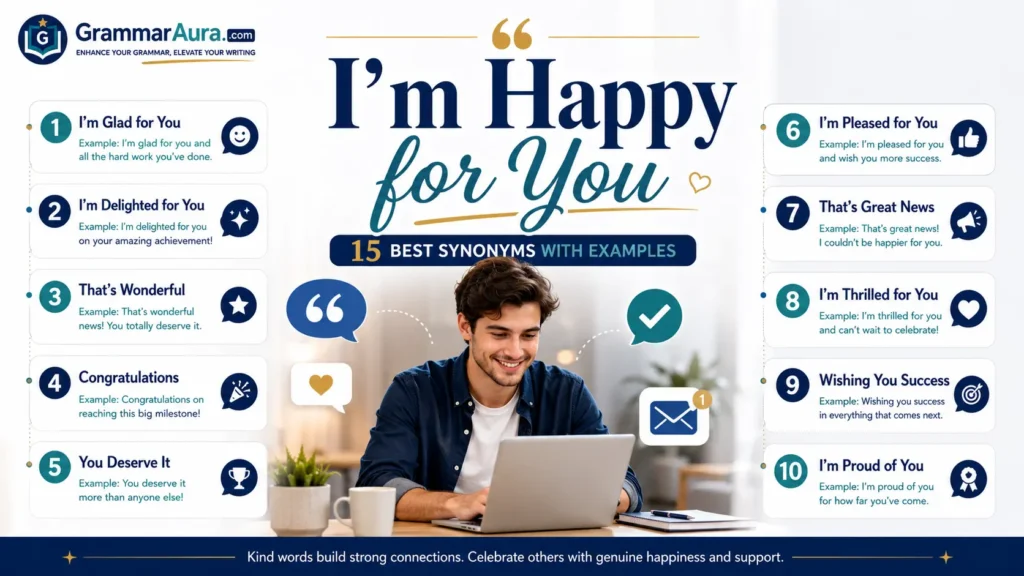

When expressing genuine happiness for someone else, it is more than just a polite gesture because it truly shows empathy, care, and emotional connection. I’ve noticed that while I’m happy you is a simple, effective phrase, using thoughtful alternatives can make your message feel more personal, heartfelt, and memorable. In real conversations, choosing the right words ensures your sentiment resonates deeply with the person you’re congratulating or encouraging.
From experience, even small changes in wording can make emotional communication feel more real and supportive. A warm message helps people feel understood and valued, especially during moments of success or joy.
What Does “I’m Happy for You” Mean?
“I’m happy for you” expresses joy, support, or congratulations for someone else’s achievement, good news, or positive life event. It communicates that you share in their happiness and genuinely celebrate their success or milestone.
When to Use “I’m Happy for You”
- Celebrating personal achievements (graduations, promotions, relationships)
- Expressing support for a friend or loved one
- Offering encouragement in both personal and professional contexts
- Showing empathy and shared joy
Is It Professional/Polite to Say “I’m Happy for You”?
Yes, it is polite and universally appropriate. In professional settings, it works best when phrased slightly formally, e.g., “I’m genuinely pleased with your accomplishment.” In personal contexts, you can be warmer and more expressive.
Pros and Cons
Pros
- Simple, clear, and heartfelt
- Universally understood
- Shows empathy and support
Cons
- Can feel generic if overused
- Lacks emotional depth in casual phrasing
- May sound formal if not personalized
I’m Happy for You Synonyms:
- I’m Thrilled for You
- I’m Overjoyed for You
- That’s Wonderful News!
- I’m So Happy to Hear That
- That Makes Me Really Happy
- I’m Delighted for You
- I Couldn’t Be Happier for You
- I’m Excited for You
- I’m Pleased for You
- That’s Fantastic!
- I’m So Glad for You
- Kudos to You
- I’m Joyful for You
- That Brings Me Joy
- I’m So Thrilled for Your Success
I’m Thrilled for You
Meaning:
Expresses excitement and strong happiness for someone.
Explanation:
A more energetic version of happiness, conveying enthusiasm.
Example:
“I’m thrilled for you on landing your dream job!”
Best Use:
Major achievements or exciting news.
Worst Use:
Small, everyday occurrences (like minor errands).
Tone:
Excited, supportive, heartfelt
I’m Overjoyed for You
Meaning:
A heartfelt and emotional expression of happiness.
Explanation:
Shows deep happiness and personal investment in their joy.
Example:
“I’m overjoyed for you on your engagement!”
Best Use:
Significant personal milestones.
Worst Use:
Casual or minor updates.
Tone:
Emotional, warm, sincere
That’s Wonderful News!
Meaning:
Expresses delight and positivity about the news itself.
Explanation:
Focuses on the event rather than yourself.
Example:
“That’s wonderful news! Congratulations on your promotion.”
Best Use:
Professional and personal announcements.
Worst Use:
When a personal emotional connection is intended.
Tone:
Positive, cheerful, neutral
I’m So Happy to Hear That
Meaning:
Shows immediate joy upon hearing good news.
Explanation:
Expresses responsiveness and attentiveness.
Example:
“I’m so happy to hear that you got the scholarship!”
Best Use:
Conversations or texts with friends and colleagues.
Worst Use:
Formal letters (can feel casual).
Tone:
Warm, genuine, friendly
That Makes Me Really Happy
Meaning:
Shares personal happiness sparked by their news.
Explanation:
Emphasizes shared joy.
Example:
“That makes me really happy to know your project succeeded.”
Best Use:
Close friends, family, or colleagues.
Worst Use:
Professional emails without personal rapport.
Tone:
Sincere, friendly, supportive
I’m Delighted for You
Meaning:
A slightly formal, polished expression of happiness.
Explanation:
Suitable for professional or formal congratulations.
Example:
“I’m delighted for you on receiving the award.”
Best Use:
Workplace, formal letters, or professional emails.
Worst Use:
Casual chats among friends.
Tone:
Polished, formal, pleasant
I Couldn’t Be Happier for You
Meaning:
Shows maximum personal joy for someone else’s happiness.
Explanation:
Emphasizes intensity of shared emotion.
Example:
“I couldn’t be happier for you in your new home!”
Best Use:
Close relationships, significant life events.
Worst Use:
Minor achievements or formal situations.
Tone:
Emphatic, heartfelt, warm
I’m Excited for You
Meaning:
Shows anticipation and enthusiasm for someone’s future.
Explanation:
Ideal for upcoming events or opportunities.
Example:
“I’m excited for you starting your new role next week!”
Best Use:
New beginnings or opportunities.
Worst Use:
Past events that have already concluded.
Tone:
Energetic, optimistic, friendly
I’m Pleased for You
Meaning:
Polite and slightly formal expression of happiness.
Explanation: }
Useful in professional or semi-formal settings.
Example:
“I’m pleased for you on completing the project successfully.”
Best Use:
Workplace or formal announcements.
Worst Use:
Casual texts with friends (can feel stiff).
Tone:
Polite, formal, neutral
That’s Fantastic!
Meaning:
Cheerful and energetic acknowledgment of good news.
Explanation:
Focuses on enthusiasm and positivity.
Example:
“That’s fantastic! Congratulations on your promotion!”
Best Use:
Informal celebrations and messages.
Worst Use:
Serious or formal situations.
Tone:
Cheerful, friendly, enthusiastic
I’m So Glad for You
Meaning:
Expresses genuine pleasure at someone’s happiness.
Explanation:
Casual, heartfelt, and personal.
Example:
“I’m so glad for you that your surgery went well.”
Best Use:
Close friends and family.
Worst Use:
Corporate or formal contexts.
Tone:
Warm, empathetic, friendly
Kudos to You
Meaning:
Congratulatory phrase for achievements.
Explanation:
Recognizes success and effort.
Example:
“Kudos to you for leading such a successful event!”
Best Use:
Workplace or achievement recognition.
Worst Use:
Deep personal milestones (less emotional).
Tone:
Casual, encouraging, friendly
I’m Joyful for You
Meaning:
Expresses a deeper, reflective happiness.
Explanation:
Suitable for significant personal news with emotional weight.
Example:
“I’m joyful for you on your wedding day.”
Best Use:
Personal, heartfelt moments.
Worst Use:
Casual workplace announcements.
Tone:
Warm, emotional, sincere
That Brings Me Joy
Meaning:
Shows personal emotional uplift from their happiness.
Explanation:
Focuses on shared experience and connection.
Example:
“That brings me joy knowing your hard work paid off.”
Best Use:
Close relationships, meaningful news.
Worst Use:
Minor or trivial updates.
Tone:
Heartfelt, warm, personal
I’m So Thrilled for Your Success
Meaning:
Enthusiastic acknowledgment of accomplishments.
Explanation:
Highlights support and excitement.
Example:
“I’m so thrilled for your success with the publication!”
Best Use:
Academic, professional, and personal celebrations.
Worst Use:
Small achievements or casual messages.
Tone:
Enthusiastic, supportive, polished
Comparison Table of Top Alternatives
| Alternative Phrase | Best For | Tone | Formality |
| I’m Thrilled for You | Major achievements | Enthusiastic | Medium |
| I’m Overjoyed for You | Personal milestones | Emotional | Medium |
| That’s Wonderful News! | Professional & personal | Positive | Medium |
| I’m So Happy to Hear That | Everyday good news | Warm | Low |
| That Makes Me Really Happy | Personal conversations | Sincere | Low |
| I’m Delighted for You | Professional/Work | Polished | High |
| I Couldn’t Be Happier for You | Close relationships | Emphatic | Low |
| I’m Excited for You | New opportunities | Energetic | Medium |
| I’m Pleased for You | Formal announcements | Polite | High |
| Kudos to You | Achievements | Encouraging | Medium |
Final Thoughts
Expressing genuine joy for someone else is a simple yet powerful way to show empathy, care, and emotional support. While “I’m happy for you” works well, using alternatives like “I’m thrilled for you” or “That brings me joy” adds warmth and a personal touch. Thoughtful phrasing can make your congratulations feel more heartfelt, memorable, and meaningful.
Choosing the right expression depends on context, relationship, and tone. Close friends and family may appreciate more emotional phrases, while professional settings benefit from polished options like “I’m delighted for you” or “Kudos to you.” Using varied language keeps your communication fresh, sincere, and engaging, making your happiness for others truly resonate.
FAQs
Is “I’m happy for you” always appropriate?
Yes, “I’m happy for you” is generally safe and polite for personal and professional use. However, for deeper emotional connections or formal settings, using alternatives like “I’m thrilled for you” or “I’m delighted for you” can make your message feel more personal and thoughtful.
What’s the difference between “I’m happy for you” and “I’m thrilled for you”?
“I’m happy for you” is simple and sincere, while “I’m thrilled for you” conveys more enthusiasm and excitement. Use “thrilled” for major achievements or exciting life events where you want to emphasize your delight and celebration.
Can I use these phrases in professional emails?
Yes, professional alternatives like “I’m delighted for you”, “Kudos to you”, or “That’s wonderful news!” work well. They convey support and encouragement without being overly casual, maintaining a polite and professional tone suitable for workplace communication.
Which phrases are best for close friends or family?
Phrases like “I’m overjoyed for you”, “I couldn’t be happier for you”, and “That brings me joy” are best for friends and family. They are warm, emotional, and heartfelt, showing you truly share in their happiness.
Are casual alternatives appropriate for text messages?
Absolutely. Casual expressions like “That’s fantastic!”, “I’m so happy to hear that” and “I’m excited for you” feel friendly and natural, making them perfect for quick, informal messages or social media comments.
Can I mix different alternatives in one message?
Yes. Combining phrases like “I’m thrilled for you” and “That brings me joy” can add variety and warmth. Just ensure the tone matches the context, keeping your message sincere, clear, and heartfelt.
Which alternative is best for major life milestones?
For major events like weddings, graduations, or promotions, use phrases like “I’m overjoyed for you”, “I couldn’t be happier for you”, or “I’m so thrilled for your success”. These convey strong emotional support and celebration.
Is “Kudos to you” too informal for work?
“Kudos to you” works in most professional settings, especially when recognizing achievements. It’s friendly, encouraging, and professional enough for emails, team chats, or announcements, but may not suit very formal documents or executive-level communication.
How do I choose the right phrase?
Consider the relationship, context, and tone. Emotional and personal phrases work best with close friends or family, while polished and neutral alternatives are ideal for professional settings. Matching tone ensures your expression of happiness feels appropriate, genuine, and well-received.
Why use alternatives instead of repeating “I’m happy for you”?
Using alternatives prevents repetition and adds variety, warmth, and emotional depth. It allows your message to feel personalized and thoughtful, making your congratulations stand out and show genuine care for the other person’s achievements or milestones.
