
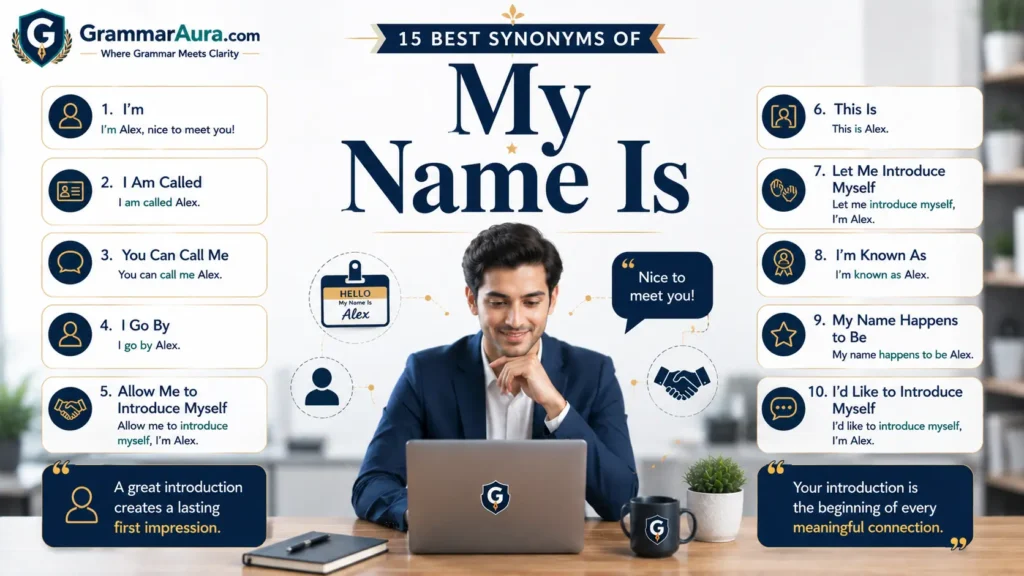

15 Best Synonyms of “My Name Is” (With Examples) helps you learn natural ways to introduce yourself in daily and professional communication. Introducing yourself is one of the most important parts of communication, and introducing yourself well helps you make a strong start in any situation.
The phrase My Name Is is simple and effective, but there are many ways to express the same idea with warmth, more personality, and style. Choosing the right alternative can make your introduction feel personal, thoughtful, and engaging, whether in professional or social settings.
Using your way to introduce yourself sets the tone for conversation. Creative and context-appropriate alternatives to My Name Is allow you to convey confidence, friendliness, and authenticity, making it easier to connect with new colleagues, friends, and clients.
What Does “My Name Is” Mean?
The phrase “My Name Is” is a straightforward way of telling someone who you are. It is a basic introduction used in both casual and formal interactions to share your identity politely and clearly.
When to Use “My Name Is”
- Meeting someone for the first time
- Introducing yourself in emails or virtual meetings
- Networking events, presentations, or interviews
- Formal and informal social interactions
Is It Professional/Polite to Say “My Name Is”?
Yes. It is universally polite and professional. It works in nearly every context, but depending on tone and setting, alternative expressions can make your introduction more engaging, warm, or creative.
Pros and Cons
Pros
- Simple, clear, and widely understood
- Polite and professional
- Safe for any context
Cons
- Can feel too formal or robotic in casual settings
- Lacks personality or warmth if overused
- Doesn’t convey enthusiasm or friendliness
My Name Is Synonyms:
- I’m Called…
- You Can Call Me…
- I Go By…
- Let Me Introduce Myself
- I’m Known As…
- Allow Me to Introduce Myself
- I Respond to…
- I’m…
- My Friends Call Me…
- I Prefer to Be Called…
- You May Call Me…
- I’m Introduced As…
- Friends Know Me As…
- I Go By the Name…
- Allow Me to Present Myself
I’m Called…
Meaning:
A friendly way to share your name.
Explanation:
Slightly informal, used to introduce yourself naturally in conversation.
Example:
“I’m called Alex. It’s great to meet you.”
Best Use:
Casual meetings, social events, informal networking.
Worst Use:
Formal business introductions or official documents.
Tone:
Friendly, approachable, conversational
You Can Call Me…
Meaning:
Offers a relaxed, approachable introduction.
Explanation:
Suggests friendliness and openness, often used when giving a nickname or preferred name.
Example:
“You can call me Sam. I’m excited to work with you.”
Best Use:
Casual settings, teams, or new social groups.
Worst Use:
Formal or legal contexts.
Tone:
Warm, friendly, approachable
I Go By…
Meaning:
Shows your preferred name, especially if different from your legal name.
Explanation:
Highlights personal preference or nickname, making introductions feel more personalized.
Example:
“I go by Jessie. Nice to meet you.”
Best Use:
Social introductions, creative industries, and informal professional settings.
Worst Use:
Legal or highly formal documentation.
Tone:
Personal, friendly, relaxed
Let Me Introduce Myself
Meaning:
Formal phrase to start a self-introduction.
Explanation:
Polite and professional; good for presentations, emails, or meetings.
Example:
“Let me introduce myself. I’m Rachel, the new project manager.”
Best Use:
Corporate meetings, presentations, and formal emails.
Worst Use:
Informal social situations.
Tone: Polite, professional, formal
I’m Known As…
Meaning:
Highlight a name you are recognized by.
Explanation:
Useful if your nickname or professional alias differs from your legal name.
Example:
“I’m known as Max. Looking forward to collaborating with you.”
Best Use:
Professional settings with known nicknames, social events.
Worst Use:
Legal or official introductions.
Tone:
Friendly, approachable, slightly formal
Allow Me to Introduce Myself
Meaning:
Polite, formal introduction phrase.
Explanation:
Often used in presentations, speeches, or formal meetings to convey respect and professionalism.
Example:
“Allow me to introduce myself. I’m Dr. Lena Brooks, your new consultant.”
Best Use:
Formal professional settings, conferences, and client meetings.
Worst Use:
Casual, one-on-one social situations.
Tone:
Professional, respectful, formal
I Respond to…
Meaning:
Indicates the name you prefer to be addressed by.
Explanation:
Shows attentiveness to how you like to be called, polite, and clear.
Example:
“I respond to Kai. Excited to be part of this team.”
Best Use:
Teams, informal professional introductions.
Worst Use:
Casual small talk; overly formal letters.
Tone:
Polite, personal, professional
I’m…
Meaning:
Simple, casual way to introduce your name.
Explanation:
Short and versatile; works for most contexts but can be too informal for formal communication.
Example:
“I’m Jordan. It’s great to meet you.”
Best Use:
Casual introductions, social events, video calls.
Worst Use:
Legal documents, formal presentations.
Tone:
Casual, friendly, approachable
My Friends Call Me…
Meaning:
Highlights a nickname used socially.
Explanation:
Personal and friendly, emphasizes social connection.
Example:
“My friends call me Sam. Looking forward to getting to know everyone.”
Best Use:
Social settings, informal team meetings.
Worst Use:
Formal introductions or professional emails.
Tone:
Friendly, personal, informal
I Prefer to Be Called…
Meaning:
Politely communicate your preferred name.
Explanation:
Shows respect for identity and encourages correct usage.
Example:
“I prefer to be called Alex. Excited to meet the team.”
Best Use:
Professional and social introductions when a preferred name differs from the legal name.
Worst Use:
Very informal chats where formality isn’t needed.
Tone:
Polite, considerate, respectful
You May Call Me…
Meaning:
FA formaland courteous way to offer a name.
Explanation:
Often used in professional or formal settings; polite and clear.
Example:
“You may call me Dr. Stevens. I’m looking forward to working together.”
Best Use:
Professional meetings, emails, and formal social events.
Worst Use:
Casual or very informal introductions.
Tone:
Formal, polite, professional
I’m Introduced As…
Meaning:
States how others typically refer to you.
Explanation:
Useful when introducing yourself in formal or professional contexts, especially if known by a title or nickname.
Example:
“I’m introduced as Ms. Taylor. It’s a pleasure to meet you.”
Best Use:
Professional introductions, networking events, and official functions.
Worst Use:
Informal chats or casual social events.
Tone:
Professional, polite, formal
Friends Know Me As…
Meaning:
Informal introduction showing social familiarity.
Explanation:
Highlights your nickname or friendly identity, making introductions warmer.
Example:
“Friends know me as Liz. Happy to meet you!”
Best Use:
Social introductions, casual teams, or informal networking.
Worst Use:
Formal corporate or academic introductions.
Tone:
Friendly, informal, approachable
I Go By the Name…
Meaning:
Indicates the name you prefer, formal yet flexible.
Explanation:
Works in both professional and social contexts; polite and informative.
Example:
“I go by the name Jordan. Excited to collaborate with you.”
Best Use:
Semi-formal professional settings or casual networking.
Worst Use:
Very casual conversations where simpler phrasing suffices.
Tone:
Polite, flexible, professional
Allow Me to Present Myself
Meaning:
Formal, slightly ceremonial introduction phrase.
Explanation:
Used in speeches, formal meetings, or networking events; conveys respect and professionalism.
Example:
“Allow me to present myself. I am Dr. Rebecca Carter, your new liaison.”
Best Use:
Formal professional events, conferences, official introductions.
Worst Use:
Casual one-on-one meetings or friendly social settings.
Tone:
Formal, respectful, professional
Comparison Table of Top Alternatives
| Phrase | Best For | Tone | Formality |
| I’m Called… | Casual social | Friendly, approachable | Low |
| You Can Call Me… | Social/Team settings | Warm, friendly | Low |
| I Go By… | Nicknames, casual-professional | Personal, friendly | Low-Medium |
| Let Me Introduce Myself | Formal professional | Polite, professional | High |
| I’m Known As… | Nickname/professional | Friendly, slightly formal | Medium |
| Allow Me to Introduce Myself | Presentations, formal events | Respectful, formal | High |
| I Respond To… | Teams, semi-professional | Polite, professional | Medium |
| I’m… | Casual social | Friendly, approachable | Low |
| My Friends Call Me… | Social settings | Friendly, informal | Low |
| I Prefer to Be Called… | Preferred name situations | Polite, respectful | Medium |
| You May Call Me… | Professional/formal | Polite, formal | High |
| I’m Introduced As… | Networking/events | Professional, polite | High |
| Friends Know Me As… | Casual social | Informal, friendly | Low |
| I Go By the Name… | Semi-formal | Polite, flexible | Medium |
| Allow Me to Present Myself | Formal/corporate | Formal, respectful | High |
Final Thoughts
Using alternatives to “My Name Is” can transform a simple introduction into a meaningful and engaging interaction. By choosing phrases that reflect your personality, tone, and context, you can make a lasting impression and foster warmth, approachability, and professionalism. Whether casual or formal, the right words can set the stage for a positive and memorable connection.
Selecting the best phrase depends on your audience and situation. Casual options like “I’m” or “You Can Call Me…” create friendliness, while formal expressions like “Allow Me to Introduce Myself” convey professionalism and respect. Balancing tone and context ensures your introduction is authentic, clear, and inviting, helping you connect with others confidently in any setting.
FAQs
Can “My Name Is” be used in casual conversations?
Yes, “My Name Is” works in casual settings, but alternatives like “I’m” or “You Can Call Me…” may feel more relaxed and approachable, helping you build rapport quickly. It’s versatile, but choosing a warmer alternative often makes casual introductions feel friendlier.
Which alternative is most professional?
“Allow Me to Introduce Myself” and “Let Me Introduce Myself” are formal and professional, ideal for corporate meetings, presentations, or networking events where respect and clarity are essential.
Can these phrases be used in emails?
Yes. Options like “I Go By…” or “You May Call Me…” work well in professional emails, while informal choices like “I’m Called…” or “My Friends Call Me…” suit casual correspondence. Context determines the best fit.
Which phrases are best for social events?
Casual alternatives like “I’m”, “I’m Called…”, and “My Friends Call Me…” are ideal for social settings, helping you sound friendly and approachable while making your introduction feel natural.
Is it okay to use nicknames in introductions?
Absolutely. Phrases like “I Go By…” or “You Can Call Me…” allow you to share nicknames respectfully, making your introduction personal and relatable, especially in informal or team-based environments.
Can these alternatives be used for virtual meetings?
Yes. In video calls or online meetings, phrases like “I Respond To…” or “I Prefer to Be Called…” clearly communicate how you’d like to be addressed, helping build connection even remotely.
Are there alternatives suitable for children or informal settings?
Yes. Friendly phrases like “My Friends Call Me…” or “I’m Called…” are approachable, fun, and easy for kids or casual introductions, fostering comfort and rapport.
Can you combine alternatives?
Yes. For example, “I’m Alex, but you can call me Al” combines a formal introduction with a casual nickname, balancing professionalism and friendliness effectively.
Which phrases show respect in formal settings?
Options like “Allow Me to Introduce Myself”, “You May Call Me…”, or “I’m Introduced As…” convey professionalism and respect, making them suitable for executive meetings, conferences, or formal presentations.
How do I choose the best phrase?
Consider your audience, setting, and tone. Use casual phrases for friendly, social, or informal professional introductions, and formal phrases for corporate, networking, or official events. Tailoring your introduction ensures clarity, warmth, and a positive first impression.
