
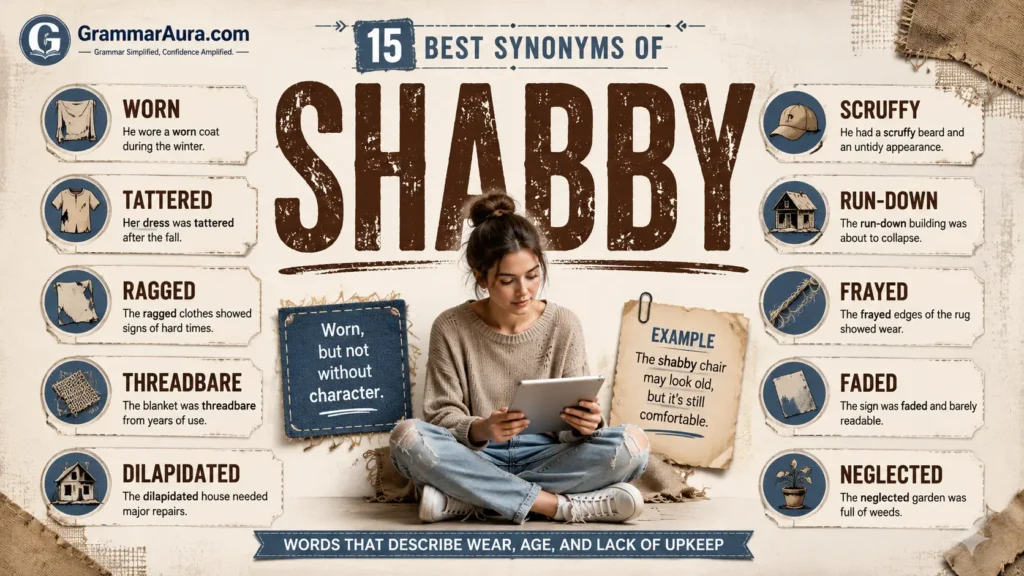

15 Best Synonyms of ‘Shabby’ highlights finding the right word to describe something like shabby, showing how it can completely change how a message feels. From my experience, instead of sounding harsh or judgmental, the right synonym can help you describe something with more care, nuance, and emotional sensitivity, especially when talking about clothing, furniture, places, or appearance.
I’ve noticed that thoughtful wording allows you to communicate clearly and respectfully using alternatives. It also helps you adjust tone—sometimes you want to sound neutral, descriptive, or gently critical, but without being rude. This simple shift in language improves everyday description and makes communication feel more human and careful.
What Does “Shabby” Mean?
The word shabby means something that is worn out, old, or in poor condition due to age or neglect. It is commonly used to describe clothes, buildings, furniture, or appearance.In simple terms, shabby = worn, tired-looking, or poorly maintained.
When to Use “Shabby”
- Old or worn clothing
- Poorly maintained buildings or rooms
- Furniture that looks aged
- Slightly untidy appearance
Is It Professional or Polite to Say “Shabby”?
Shabby is mildly negative but not highly offensive. It is acceptable in casual and descriptive writing, but in professional settings, softer alternatives like worn, aged, or weathered are often preferred.
Pros and Cons
Pros:
- Clear descriptive meaning
- Common and easy to understand
- Useful in storytelling
Cons:
- Slightly negative tone
- Can sound judgmental
- Not ideal for formal contexts
Shabby synonyms:
- Worn
- Run-down
- Worn-out
- Tattered
- Faded
- Dilapidated
- Weathered
- Threadbare
- Scruffy
- Unkempt
- Ragged
- Shoddy
- Neglected
- Old-fashioned
- Aged
Worn
Meaning:
Used or aged over time.
Explanation:
Neutral and soft alternative.
Example:
A worn jacket hung on the chair.
Best Use:
Neutral descriptions
Worst Use:
Emotional criticism
Tone:
Gentle, neutral
Run-down
Meaning:
In poor condition due to neglect.
Explanation:
Often used for places.
Example:
A run-down building.
Best Use:
Urban descriptions
Worst Use:
People descriptions
Tone:
Negative, descriptive
Worn-out
Meaning:
Completely tired or aged.
Explanation:
Stronger than “worn.”
Example:
A worn-out sofa.
Best Use:
Furniture, objects
Worst Use:
Formal writing
Tone:
Neutral, slightly negative
Tattered
Meaning:
Ripped or damaged from use.
Explanation:
Used for fabric or clothes.
Example:
A tattered shirt.
Best Use:
Storytelling
Worst Use:
Professional tone
Tone:
Harsh, vivid
Faded
Meaning:
Lost color or brightness.
Explanation:
Often visual deterioration.
Example:
Faded curtains in the room.
Best Use:
Design, aesthetics
Worst Use:
Character judgment
Tone:
Soft, neutral
Dilapidated
Meaning:
Badly neglected and damaged.
Explanation:
Strong architectural term.
Example:
A dilapidated house.
Best Use:
Formal descriptions
Worst Use:
Casual speech
Tone:
Formal, negative
Weathered
Meaning:
Aged naturally over time.
Explanation:
Can sound poetic.
Example:
A weathered barn door.
Best Use:
Nature, storytelling
Worst Use:
Modern slang
Tone:
Warm, descriptive
Threadbare
Meaning:
Worn until thin.
Explanation:
Often for fabric or clothes.
Example:
A threadbare coat.
Best Use:
Literature
Worst Use:
Professional reports
Tone:
Old-fashioned, descriptive
Scruffy
Meaning:
Untidy or rough appearance.
Explanation:
Often used for people or pets.
Example:
A scruffy look.
Best Use:
Casual description
Worst Use:
Formal writing
Tone:
Informal, slightly negative
Unkempt
Meaning:
Not properly maintained or neat.
Explanation:
Used for appearance or hair.
Example:
Unkempt hair.
Best Use:
Neutral criticism
Worst Use:
Friendly tone
Tone:
Formal, slightly harsh
Ragged
Meaning:
Rough or torn edges.
Explanation:
Visual damage or wear.
Example:
A ragged blanket.
Best Use:
Storytelling
Worst Use:
Professional writing
Tone:
Harsh, vivid
Shoddy
Meaning:
Poor quality or badly made.
Explanation:
Often implies criticism.
Example:
Shoddy workmanship.
Best Use:
Reviews
Worst Use:
Polite conversation
Tone:
Strongly negative
Neglected
Meaning:
Not cared for properly.
Explanation:
Focus on the lack of attention.
Example:
A neglected garden.
Best Use:
Emotional writing
Worst Use:
Light description
Tone:
Serious, emotional
Old-fashioned
Meaning:
Outdated style or design.
Explanation:
Not necessarily bad.
Example:
An old-fashioned dress.
Best Use:
Style descriptions
Worst Use:
Damage context
Tone:
Neutral, soft
Aged
Meaning:
Old but possibly valuable.
Explanation:
Neutral or positive tone.
Example:
An aged wooden table.
Best Use:
Furniture, wine
Worst Use:
Insults
Tone:
Respectful, calm
Comparison Table of Top Alternatives
| Synonym | Meaning Focus | Best Context | Tone |
| Worn | Light use | Neutral description | Gentle |
| Run-down | Neglect | Buildings | Negative |
| Worn-out | Heavy use | Objects | Neutral |
| Tattered | Torn condition | Clothing | Harsh |
| Faded | Color loss | Design | Soft |
| Dilapidated | Severe damage | Architecture | Formal negative |
| Weathered | Natural aging | Nature/story | Warm |
| Threadbare | Thin fabric | Literature | Old-fashioned |
| Scruffy | Untidy look | Casual speech | Informal |
| Aged | Old but valued | Furniture/wine | Respectful |
Final Thoughts
Understanding the different ways to express “shabby” helps you describe people, places, and objects with more precision and emotional awareness. Instead of relying on a single word that may sound too harsh, alternatives like weathered, worn, or aged allow you to soften your tone while still being clear. This makes your communication more thoughtful and reader-friendly.
At the same time, stronger words such as run-down, ragged, or dilapidated are useful when you need to emphasize neglect or damage. The key is choosing language that matches both meaning and intention. With the right synonym, you can balance clarity and sensitivity, making your writing more expressive and respectful.
FAQs
What does “shabby” mean?
The word shabby describes something that looks old, worn out, or poorly maintained due to age or neglect. It is often used for clothing, furniture, buildings, or appearance. It can carry a slightly negative tone but is commonly used in everyday descriptive language.
Is “shabby” a rude word?
No, shabby is not a rude word, but it can sound mildly negative depending on context. It describes a poor condition rather than attacking a person. However, in sensitive situations, softer alternatives like worn or aged may be more polite.
What is a simple synonym for shabby?
A simple synonym for shabby is worn, which means something has been used over time and shows signs of age. Other easy alternatives include faded or old, depending on context and tone.
What is the difference between shabby and worn?
Shabby usually implies neglect or poor appearance, while worn simply means something has been used over time. Worn is more neutral and can even feel natural, while shabby often has a slightly negative tone.
Can shabby describe a person?
Yes, but carefully. Shabby can describe appearance, such as clothing or grooming, but it should not be used to judge character. Softer words like unkempt or scruffy are often more appropriate and respectful.
What is a formal synonym for shabby?
A formal synonym for shabby is dilapidated (for buildings) or worn in neutral contexts. These terms are more suitable for professional writing, reports, or academic descriptions.
What is the difference between shabby and run-down?
Shabby often refers to appearance or small objects, while run-down is usually used for buildings or places. Run-down suggests more structural neglect, whereas shabby focuses on visual wear.
What is a polite way to say shabby?
A polite way to say shabby includes worn, aged, weathered, or faded. These words reduce negativity and sound more respectful while still describing the condition accurately.
What is a strong synonym for shabby?
A strong synonym for shabby is dilapidated, which means severely damaged or neglected. It is often used for buildings or environments that are in very poor condition.
Why should I learn synonyms of shabby?
Learning synonyms of shabby helps you improve your writing by making it more precise and expressive. Instead of repeating one word, you can choose from weathered, worn, or ragged depending on tone, context, and emotional impact.
