
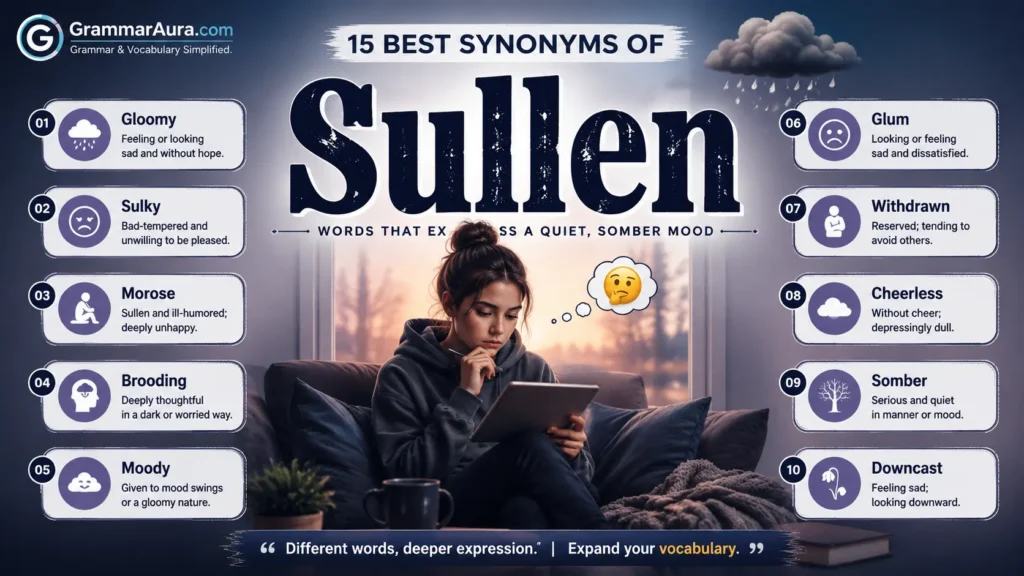

15 Best Synonyms of ‘Sullen’ focuses on finding the right word to describe emotions like sullen, making communication feel more empathetic and thoughtful. In my experience, instead of labeling someone harshly, using softer, more descriptive alternatives helps you express feelings with care and understanding, especially in emotionally intelligent writing and storytelling.
When you’re describing a mood, using a synonym, or shaping a message in human communication, the right approach can make your writing feel less judgmental and more natural. I’ve noticed that when you’re working with emotional tone, even simple alternatives help improve clarity, allowing you to express feelings in a way that feels honest, gentle, and more connected.
What Does “Sullen” Mean?
Sullen means bad-tempered, silent, or showing a gloomy and withdrawn emotional state, often due to anger, sadness, or disappointment. In simple terms, a sullen person is quiet, moody, and emotionally closed off.
When to Use “Sullen”
You use sullen when describing:
- A person who is quietly angry or upset
- A mood that feels dark or withdrawn
- Emotional reactions like silence after disappointment
It is often used in literature, storytelling, and emotional descriptions.
Is It Professional or Polite to Say “Sullen”?
Yes, but it depends on context.
- It is acceptable in writing and descriptions
- It can sound slightly negative or judgmental in direct speech
- Better used in literary, emotional, or narrative contexts
Pros and Cons
Pros:
- Strong emotional description
- Useful in storytelling
- Expresses mood clearly
Cons:
- Can sound negative
- May feel judgmental
- Not ideal for polite conversation
Sullen synonyms:
- Gloomy
- Moody
- Withdrawn
- Brooding
- Pouty
- Glum
- Morose
- Surly
- Sulky
- Dour
- Silent
- Grumpy
- Bad-tempered
- Cross
- Displeased
Gloomy
Meaning:
Feeling dark, unhappy, or emotionally low.
Explanation:
Used for mood or atmosphere.
Example:
He sat in a gloomy silence.
Best Use:
Emotional description
Worst Use:
Neutral reports
Tone:
Sad, soft
Moody
Meaning:
Emotionally changeable or unhappy.
Explanation:
Often linked with mood swings or silence.
Example:
She was moody all evening.
Best Use:
Casual description
Worst Use:
Formal writing
Tone:
Unstable, emotional
Withdrawn
Meaning:
Emotionally distant and quiet.
Explanation:
A person who avoids interaction.
Example:
He became withdrawn after the argument.
Best Use:
Psychological context
Worst Use:
Casual teasing
Tone:
Quiet, reserved
Brooding
Meaning:
Deeply thinking while appearing unhappy.
Explanation:
Often linked with silent anger.
Example:
She sat brooding in the corner.
Best Use:
Literature, storytelling
Worst Use:
Friendly conversation
Tone:
Intense, emotional
Pouty
Meaning:
Showing displeasure with a facial expression.
Explanation:
Often mild and childish.
Example:
He looked pouty after losing.
Best Use:
Informal speech
Worst Use:
Serious writing
Tone:
Playful, mild
Glum
Meaning:
Unhappy and quiet.
Explanation:
Describes mild sadness.
Example:
She looked glum after the news.
Best Use:
Everyday speech
Worst Use:
Formal analysis
Tone:
Low, sad
Morose
Meaning:
Sullen and unhappy.
Explanation:
Stronger than “glum.”
Example:
He became morose after the loss.
Best Use:
Literary writing
Worst Use:
Casual talk
Tone:
Heavy, dark
Surly
Meaning:
Bad-tempered and unfriendly.
Explanation:
Often shows irritability.
Example:
The guard was sure.
Best Use:
Character description
Worst Use:
Polite speech
Tone:
Harsh, rude
Sulky
Meaning:
Silent due to annoyance.
Explanation:
Common in emotional reactions.
Example:
He gave a sulky response.
Best Use:
Informal situations
Worst Use:
Professional writing
Tone:
Moody, childish
Dour
Meaning:
Serious and unfriendly.
Explanation:
Often emotionless or stern.
Example:
He had a dour expression.
Best Use:
Formal description
Worst Use:
Friendly tone
Tone:
Serious, cold
Silent
Meaning:
Not speaking or communicating.
Explanation:
May indicate emotional withdrawal.
Example:
She remained silent all day.
Best Use:
Neutral description
Worst Use:
Emotional labeling
Tone:
Neutral, calm
Grumpy
Meaning:
Easily annoyed or irritated.
Explanation:
Common informal word.
Example:
He woke up grumpy.
Best Use:
Casual speech
Worst Use:
Formal writing
Tone:
Light, annoyed
Bad-tempered
Meaning:
Frequently angry or irritable.
Explanation:
Describes personality or mood.
Example:
She became bad-tempered.
Best Use:
General description
Worst Use:
Friendly tone
Tone:
Strong, negative
Cross
Meaning:
Slightly angry or annoyed.
Explanation:
Mild British expression.
Example:
He was cross with her.
Best Use:
Informal speech
Worst Use:
Formal writing
Tone:
Mild, irritated
Displeased
Meaning:
Unhappy or dissatisfied.
Explanation:
More polite than angry.
Example:
She looked displeased with the result.
Best Use:
Professional communication
Worst Use:
Casual storytelling
Tone:
Formal, restrained
Comparison Table of Top Alternatives
| Synonym | Meaning Type | Best Context | Tone |
| Gloomy | Sad mood | Emotional writing | Soft |
| Moody | Changing emotions | Casual speech | Emotional |
| Withdrawn | Emotionally distant | Psychology | Quiet |
| Brooding | Deep sadness | Literature | Intense |
| Sulky | Silent annoyance | Informal speech | Childish |
| Morose | Deep unhappiness | Writing | Heavy |
| Surly | Bad-tempered | Characterization | Harsh |
| Glum | Mild sadness | Everyday speech | Simple |
| Dour | Serious mood | Formal writing | Cold |
| Displeased | Unhappy formally | Professional tone | Polite |
Final Thoughts
Understanding the different ways to express “sullen” helps you describe emotions with greater sensitivity and accuracy. Instead of relying on a single word, alternatives such as glum, withdrawn, gloomy, or brooding allow you to capture subtle emotional nuances. This makes your writing more expressive and helps readers better understand the emotional tone behind a person’s behavior.
At the same time, choosing softer or more professional synonyms can prevent your language from sounding overly harsh or judgmental. Words like displeased or quiet can replace stronger emotional labels when needed. By selecting the right synonym, you improve both clarity and empathy in your communication, especially in storytelling, descriptions, or everyday conversation.
FAQs
What does the word “sullen” mean?
The word sullen means being quietly angry, unhappy, or withdrawn. A sullen person often avoids conversation and shows emotion through silence or gloomy behavior. It is commonly used to describe mood or attitude, especially when someone is upset but not openly expressing their feelings.
Is “sullen” a negative word?
Yes, sullen is generally a negative word because it describes an unhappy or bad-tempered emotional state. However, it is not extremely harsh. It is often used in storytelling or descriptions to show emotional depth rather than to insult someone directly.
What is a simple synonym of sullen?
A simple synonym of sullen is glum, which means quietly unhappy. Other easy alternatives include moody or sad, depending on the context. These words are commonly used in everyday speech and are easier to understand than more formal synonyms.
What is the difference between sullen and moody?
Sullen describes someone quiet and withdrawn due to unhappiness or anger, while moody refers to someone whose emotions change frequently. A sullen person is usually silent, whereas a moody person may switch between different emotional states.
What is a polite way to say sullen?
A more polite way to say sullen includes words like quiet, withdrawn, or displeased. These alternatives sound softer and less judgmental. They are often preferred in professional or sensitive communication where emotional neutrality is important.
Is “withdrawn” the same as sullen?
Not exactly. Withdrawn means emotionally distant or not socially engaged, while sullen includes a sense of silent unhappiness or anger. A withdrawn person may not always be upset, but a sullen person usually shows emotional displeasure.
What is the strongest synonym of sullen?
A stronger synonym of sullen is surly, which describes someone who is bad-tempered and unfriendly. While “sullen” often involves silence, “surly” suggests direct irritability or rudeness. Both are negative but differ in intensity and expression.
Can “sullen” describe mood or people?
Yes, sullen can describe both people and moods. It is often used for people who appear quiet and unhappy, but it can also describe a mood or atmosphere that feels dark, gloomy, or emotionally heavy.
What is a mild synonym of sullen?
A mild synonym of sullen is glum, which expresses quiet sadness without strong negativity. Another mild option is quiet or low-spirited, which is less emotionally intense and more neutral in tone.
Why should I learn synonyms of sullen?
Learning synonyms of sullen helps you describe emotions more precisely and sensitively. Instead of repeating the same word, you can choose terms like brooding, gloomy, or withdrawn to better match the situation. This improves writing quality and emotional expression in communication.
